श्रीमद्भगवद्गीताBhagavad Gītā · in the light of Sri Aurobindo, home

Chapter XVIII78 verses

अथाष्टादशोऽध्यायः

मोक्षसंन्यासयोगः

The Yoga of the Renunciation of Liberation

Mokṣa-saṁnyāsa-yoga

Abandon all dharmas and take refuge in the Beloved alone; he will deliver thee from all sin and evil: grieve not, and rejoice again and again. — The Delight of Krishna

The soul enters in
oṃ tat sat — sacrifice, gift and askesis offered to the Real
and is led towards
mām ekaṃ śaraṇaṃ vraja — refuge in the Divine alone, and a delight that rejoices again and again

Recitations

  1. Swami Sarvagananda ji0:00
  2. Ashit Desai0:00
In this chapter

78 verses

Summary of chapter 18

I. The Gunas. Mind and Works (1-39)

The Glta enters Into a summary psychological anatysls of the mental powers before it proceeds to its great finale, the highest secret which is that of a spiritual exceeding of all dharrnas.

II. Swabhava and Swadharma (40-48)

In this section the Gita deals with an incidental question of great importance - the ancient social idea of chaturvamya, which was a very different thing from the present day caste system.

III. Towards the Supreme Secret (49-58)

In this section the Gita re-states the body of its message.

IV. The Supreme Secret (57-78)

The essence of the teaching and the Yoga has thus been given to the disciple and the divine Teacher now proceeds to apply to his action. Attached to a crucial example, spoken to the protagonist of Kurukshetra, the words bear a much wider significance and are a universal rule for all who are ready to ascend above the ordinary mentality and to live and act in the highest spiritual consciousness.
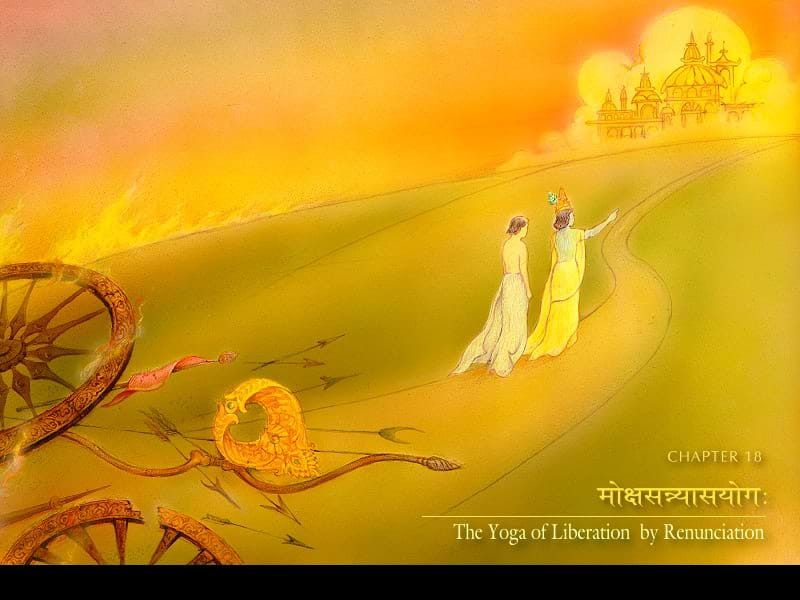
Chapter 18 illustration, titled मोक्षसंन्यासयोगः
Illustration · Sushanto Nath, Sri Aurobindo Society

Chapter outline

Choose a range to read just those verses.

  1. 18·1–12sannyésa and mega differentiated; three qualities of tyéga.
  2. 18·13–17The five determinants of Action.
  3. 18·18–28The Knowledge, the Action, the Deer according to the three Gunas.
  4. 18·29–35Intelligence and persistence of will according to the three Gunas.
  5. 18·36–39Pleasures according to the three Gunas.
  6. 18·40–48The specific works of the four types of people (caturvarnva); Spiritual perfection through and according to one's own nature and work.
  7. 18·49–58Rightly oriented spiritual discipline culminating in bhakti.
  8. 18·59–60The force of personal nature.
  9. 18·61–63The all governing God within; integral surrender to Him.
  10. 18·64–66The supreme Word of the Master.
  11. 18·67–73The importance of the secret Knowledge of the Gita; Arjuna's complete rehabilitation and his pledge to do the Divine's bidding.
  12. 18·74–78Sanjava's thrilling recollections and his conviction regarding glory and victory to the Lord with His hero disciple.
  13. 18·1–78Show all 78 verses

The verses

Showing verses 49–58 of 78 · Show all 78 verses

Śrī Bhagavān uvācaश्रीभगवानुवाच

  1. 18·49असक्तबुद्धिः सर्वत्र जितात्मा विगतस्पृहः । नैष्कर्म्यसिद्धिं परमां संन्यासेनाधिगच्छति ॥ ४९ ॥asaktabuddhiḥ sarvatra jitātmā vigataspṛhaḥ, naiṣkarmyasiddhiṁ paramāṁ saṁnyāsenādhigacchati.An understanding without attachment in all things, a soul self-conquered and empty of desire, man attains by…
  2. 18·50सिद्धिं प्राप्तो यथा ब्रह्म तथाप्नोति निबोध मे । समासेनैव कौन्तेय निष्ठा ज्ञानस्य या परा ॥ ५० ॥siddhiṁ prāpto yathā brahma tathāpnoti nibodha me, samāsenaiva kaunteya niṣṭhā jñānasya yā parā.How, having attained this perfection, one thus attains to the Brahman, hear from me, O son of Kunti, – that…
  3. 18·51बुद्ध्या विशुद्धया युक्तो धृत्यात्मानं नियम्य च । शब्दादीन्विषयांस्त्यक्त्वा रागद्वेषौ व्युदस्य च ॥ ५१ ॥buddhyā viśuddhayā yukto dhṛtyātmānaṁ niyamya ca, śabdādīnviṣayāṁstyaktvā rāgadveṣau vyudasya ca.Uniting the purified intelligence (with the pure spiritual substance in us), controlling the whole being by…
  4. 18·52विविक्तसेवी लघ्वाशी यतवाक्कायमानसः । ध्यानयोगपरो नित्यं वैराग्यं समुपाश्रितः ॥ ५२ ॥viviktasevī laghvāśī yatavākkāyamānasaḥ, dhyānayogaparo nityaṁ vairāgyaṁ samupāśritaḥ.Resorting to impersonal solitude, abstemious, speech, body and mind controlled, constantly united with the…
  5. 18·53अहङ्कारं बलं दर्पं कामं क्रोधं परिग्रहम् । विमुच्य निर्ममः शान्तो ब्रह्मभूयाय कल्पते ॥ ५३ ॥ahaṅkāraṁ balaṁ darpaṁ kāmaṁ krodhaṁ parigraham, vimucya nirmamaḥ śānto brahmabhūyāya kalpate.Having put away egoism, violence, arrogance, desire, wrath, the sense and instinct of possession, free from…
  6. 18·54ब्रह्मभूतः प्रसन्नात्मा न शोचति न काङ्क्षति । समः सर्वेषु भूतेषु मद्भक्तिं लभते पराम् ॥ ५४ ॥brahmabhūtaḥ prasannātmā na śocati na kāṅkṣati, samaḥ sarveṣu bhūteṣu madbhaktiṁ labhate parām.When one has become the Brahman, when one, serene in the Self, neither grieves nor desires, when one is equal…
  7. 18·55, a key verseभक्त्या मामभिजानाति यावान्यश्चास्मि तत्त्वतः । ततो मां तत्त्वतो ज्ञात्वा विशते तदनन्तरम् ॥ ५५ ॥bhaktyā māmabhijānāti yāvānyaścāsmi tattvataḥ, tato māṁ tattvato jñātvā viśate tadanantaram.By devotion he comes to know Me, who and how much I am and in all the reality and principles of My being…
  8. 18·56सर्वकर्माण्यपि सदा कुर्वाणो मद्व्यपाश्रयः । मत्प्रसादादवाप्नोति शाश्वतं पदमव्ययम् ॥ ५६ ॥sarvakarmāṇyapi sadā kurvāṇo madvyapāśrayaḥ, matprasādādavāpnoti śāśvataṁ padamavyayam.And by doing also all actions always lodged in Me he attains by My grace the eternal and imperishable status.
  9. 18·57चेतसा सर्वकर्माणि मयि संन्यस्य मत्परः । बुद्धियोगमुपाश्रित्य मच्चित्तः सततं भव ॥ ५७ ॥cetasā sarvakarmāṇi mayi saṁnyasya matparaḥ, buddhiyogamupāśritya maccittaḥ satataṁ bhava.Devoting all thyself to Me, giving up in thy conscious mind all thy actions into Me, resorting to Yoga of the…
  10. 18·58मच्चित्तः सर्वदुर्गाणि मत्प्रसादात्तरिष्यसि । अथ चेत्त्वमहङ्कारान्न श्रोष्यसि विनङ्क्ष्यसि ॥ ५८ ॥maccittaḥ sarvadurgāṇi matprasādāttariṣyasi, atha cettvamahaṅkārānna śroṣyasi vinaṅkṣyasi.If thou art one in heart and consciousness with Me at all times, then by My grace thou shalt pass safe through…

End of the chapter

ॐ तत्सदिति श्रीमद्भगवद्गीतासूपनिषत्सुब्रह्मविद्यायां योगशास्त्रे श्रीकृष्णार्जुनसंवादेमोक्षसंन्यासयोगो नाम अष्टादशोऽध्यायः ॥ १८॥

om tatsaditi śrīmadbhagavadgītāsūpaniṣatsubrahmavidyāyāṁ yogaśāstre śrīkṛṣṇārjunasaṁvādemokṣasaṁnyāsayogo nāma aṣṭādaśo’dhyāyaḥ

Thus, in the Upanishad sung by the Lord, the science of Brahman, the scripture of Yoga, the dialogue between Sri Krishna and Arjuna, ends the eighteenth chapter entitled “The Yoga of Liberation by Renunciation”

Go to a verse

  1. 1
  2. 2
  3. 3
  4. 4
  5. 5
  6. 6
  7. 7
  8. 8
  9. 9
  10. 10
  11. 11
  12. 12
  13. 13
  14. 14
  15. 15
  16. 16
  17. 17
  18. 18
  19. 19
  20. 20
  21. 21
  22. 22
  23. 23
  24. 24
  25. 25
  26. 26
  27. 27
  28. 28
  29. 29
  30. 30
  31. 31
  32. 32
  33. 33
  34. 34
  35. 35
  36. 36
  37. 37
  38. 38
  39. 39
  40. 40
  41. 41
  42. 42
  43. 43
  44. 44
  45. 45
  46. 46
  47. 47
  48. 48
  49. 49
  50. 50
  51. 51
  52. 52
  53. 53
  54. 54
  55. 55
  56. 56
  57. 57
  58. 58
  59. 59
  60. 60
  61. 61
  62. 62
  63. 63
  64. 64
  65. 65
  66. 66
  67. 67
  68. 68
  69. 69
  70. 70
  71. 71
  72. 72
  73. 73
  74. 74
  75. 75
  76. 76
  77. 77
  78. 78