श्रीमद्भगवद्गीताBhagavad Gītā · in the light of Sri Aurobindo, home

Chapter XVIII78 verses

अथाष्टादशोऽध्यायः

मोक्षसंन्यासयोगः

The Yoga of the Renunciation of Liberation

Mokṣa-saṁnyāsa-yoga

Abandon all dharmas and take refuge in the Beloved alone; he will deliver thee from all sin and evil: grieve not, and rejoice again and again. — The Delight of Krishna

The soul enters in
oṃ tat sat — sacrifice, gift and askesis offered to the Real
and is led towards
mām ekaṃ śaraṇaṃ vraja — refuge in the Divine alone, and a delight that rejoices again and again

Recitations

  1. Swami Sarvagananda ji0:00
  2. Ashit Desai0:00
In this chapter

78 verses

Summary of chapter 18

I. The Gunas. Mind and Works (1-39)

The Glta enters Into a summary psychological anatysls of the mental powers before it proceeds to its great finale, the highest secret which is that of a spiritual exceeding of all dharrnas.

II. Swabhava and Swadharma (40-48)

In this section the Gita deals with an incidental question of great importance - the ancient social idea of chaturvamya, which was a very different thing from the present day caste system.

III. Towards the Supreme Secret (49-58)

In this section the Gita re-states the body of its message.

IV. The Supreme Secret (57-78)

The essence of the teaching and the Yoga has thus been given to the disciple and the divine Teacher now proceeds to apply to his action. Attached to a crucial example, spoken to the protagonist of Kurukshetra, the words bear a much wider significance and are a universal rule for all who are ready to ascend above the ordinary mentality and to live and act in the highest spiritual consciousness.
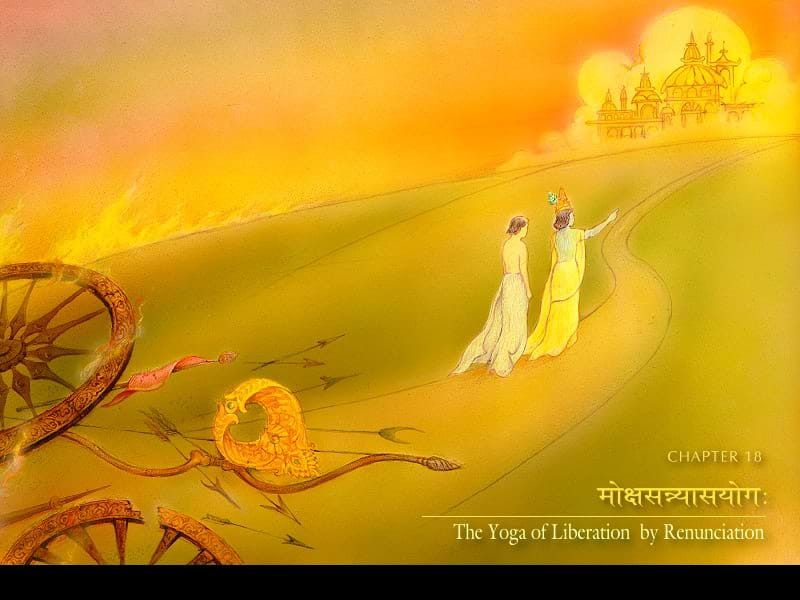
Chapter 18 illustration, titled मोक्षसंन्यासयोगः
Illustration · Sushanto Nath, Sri Aurobindo Society

Chapter outline

Choose a range to read just those verses.

  1. 18·1–12sannyésa and mega differentiated; three qualities of tyéga.
  2. 18·13–17The five determinants of Action.
  3. 18·18–28The Knowledge, the Action, the Deer according to the three Gunas.
  4. 18·29–35Intelligence and persistence of will according to the three Gunas.
  5. 18·36–39Pleasures according to the three Gunas.
  6. 18·40–48The specific works of the four types of people (caturvarnva); Spiritual perfection through and according to one's own nature and work.
  7. 18·49–58Rightly oriented spiritual discipline culminating in bhakti.
  8. 18·59–60The force of personal nature.
  9. 18·61–63The all governing God within; integral surrender to Him.
  10. 18·64–66The supreme Word of the Master.
  11. 18·67–73The importance of the secret Knowledge of the Gita; Arjuna's complete rehabilitation and his pledge to do the Divine's bidding.
  12. 18·74–78Sanjava's thrilling recollections and his conviction regarding glory and victory to the Lord with His hero disciple.
  13. 18·1–78Show all 78 verses

The verses

Showing verses 18–28 of 78 · Show all 78 verses

Śrī Bhagavān uvācaश्रीभगवानुवाच

  1. 18·18ज्ञानं ज्ञेयं परिज्ञाता त्रिविधा कर्मचोदना । करणं कर्म कर्तेति त्रिविधः कर्मसङ्ग्रहः ॥ १८ ॥jñānaṁ jñeyaṁ parijñātā trividhā karmacodanā, karaṇaṁ karma karteti trividhaḥ karmasaṅgrahaḥ.Knowledge, the object of knowledge and the knower, these three things constitute the mental impulsion to work…
  2. 18·19ज्ञानं कर्म च कर्ता च त्रिधैव गुणभेदतः । प्रोच्यते गुणसङ्ख्याने यथावच्छृणु तान्यपि ॥ १९ ॥jñānaṁ karma ca kartā ca tridhaiva guṇabhedataḥ, procyate guṇasaṅkhyāne yathāvacchṛṇu tānyapi.Knowledge, work and doer are of three kinds, says the Sankhya, according to the difference in the Gunas…
  3. 18·20सर्वभूतेषु येनैकं भावमव्ययमीक्षते । अविभक्तं विभक्तेषु तज्ज्ञानं विद्धि सात्त्विकम् ॥ २० ॥sarvabhūteṣu yenaikaṁ bhāvamavyayamīkṣate, avibhaktaṁ vibhakteṣu tajjñānaṁ viddhi sāttvikam.That by which one imperishable being is seen in all becoming, one indivisible whole in all these divisions…
  4. 18·21पृथक्त्वेन तु यज्ज्ञानं नानाभावान्पृथग्विधान् । वेत्ति सर्वेषु भूतेषु तज्ज्ञानं विद्धि राजसम् ॥ २१ ॥pṛthaktvena tu yajjñānaṁ nānābhāvānpṛthagvidhān, vetti sarveṣu bhūteṣu tajjñānaṁ viddhi rājasam.But that knowledge which sees the multiplicity of things only in their separateness and variety of operation…
  5. 18·22यत्तु कृत्स्नवदेकस्मिन्कार्ये सक्तमहैतुकम् । अतत्त्वार्थवदल्पं च तत्तामसमुदाहृतम् ॥ २२ ॥yattu kṛtsnavadekasminkārye saktamahaitukam, atattvārthavadalpaṁ ca tattāmasamudāhṛtam.The tamasic knowledge is a small and narrow way of looking at things which has no eye for the real nature of…
  6. 18·23नियतं सङ्गरहितमरागद्वेषतः कृतम् । अफलप्रेप्सुना कर्म यत्तत्सात्त्विकमुच्यते ॥ २३ ॥niyataṁ saṅgarahitamarāgadveṣataḥ kṛtam, aphalaprepsunā karma yattatsāttvikamucyateAn action which is rightly regulated, performed without attachment, without liking or disliking (for its spur…
  7. 18·24यत्तु कामेप्सुना कर्म साहङ्कारेण वा पुनः । क्रियते बहुलायासं तद्राजसमुदाहृतम् ॥ २४ ॥yattu kāmepsunā karma sāhaṅkāreṇa vā punaḥ, kriyate bahulāyāsaṁ tadrājasamudāhṛtam.But that action which a man undertakes under the dominion of desire, or with an egoistic sense of his own…
  8. 18·25अनुबन्धं क्षयं हिंसामनवेक्ष्य च पौरुषम् । मोहादारभ्यते कर्म यत्तत्तामसमुच्यते ॥ २५ ॥anubandhaṁ kṣayaṁ hiṁsāmanavekṣya ca pauruṣam, mohādārabhyate karma yattattāmasamucyate.The action undertaken from delusion (in mechanical obedience to the instincts, impulsions and unseeing ideas)…
  9. 18·26मुक्तसङ्गोऽनहंवादी धृत्युत्साहसमन्वितः । सिद्ध्यसिद्ध्योर्निर्विकारः कर्ता सात्त्विक उच्यते ॥ २६ ॥muktasaṅgo’nahaṁvādī dhṛtyutsāhasamanvitaḥ, siddhyasiddhyornirvikāraḥ kartā sāttvika ucyate.Free from attachment, free from egoism, full of a fixed (impersonal) resolution and a calm rectitude of zeal…
  10. 18·27रागी कर्मफलप्रेप्सुर्लुब्धो हिंसात्मकोऽशुचिः । हर्षशोकान्वितः कर्ता राजसः परिकीर्तितः ॥ २७ ॥rāgī karmaphalaprepsurlubdho hiṁsātmako’śuciḥ, harṣaśokānvitaḥ kartā rājasaḥ parikīrtitaḥ.Eagerly attached to the work, passionately desirous of fruit, greedy, impure, often violent and cruel and…
  11. 18·28अयुक्तः प्राकृतः स्तब्धः शठो नैष्कृतिकोऽलसः । विषादी दीर्घसूत्री च कर्ता तामस उच्यते ॥ २८ ॥ayuktaḥ prākṛtaḥ stabdhaḥ śaṭho naiṣkṛtiko’lasaḥ, viṣādī dīrghasūtrī ca kartā tāmasa ucyate.One who acts with a mechanical mind (who does not put himself really into the work), is stupid, obstinate…

End of the chapter

ॐ तत्सदिति श्रीमद्भगवद्गीतासूपनिषत्सुब्रह्मविद्यायां योगशास्त्रे श्रीकृष्णार्जुनसंवादेमोक्षसंन्यासयोगो नाम अष्टादशोऽध्यायः ॥ १८॥

om tatsaditi śrīmadbhagavadgītāsūpaniṣatsubrahmavidyāyāṁ yogaśāstre śrīkṛṣṇārjunasaṁvādemokṣasaṁnyāsayogo nāma aṣṭādaśo’dhyāyaḥ

Thus, in the Upanishad sung by the Lord, the science of Brahman, the scripture of Yoga, the dialogue between Sri Krishna and Arjuna, ends the eighteenth chapter entitled “The Yoga of Liberation by Renunciation”

Go to a verse

  1. 1
  2. 2
  3. 3
  4. 4
  5. 5
  6. 6
  7. 7
  8. 8
  9. 9
  10. 10
  11. 11
  12. 12
  13. 13
  14. 14
  15. 15
  16. 16
  17. 17
  18. 18
  19. 19
  20. 20
  21. 21
  22. 22
  23. 23
  24. 24
  25. 25
  26. 26
  27. 27
  28. 28
  29. 29
  30. 30
  31. 31
  32. 32
  33. 33
  34. 34
  35. 35
  36. 36
  37. 37
  38. 38
  39. 39
  40. 40
  41. 41
  42. 42
  43. 43
  44. 44
  45. 45
  46. 46
  47. 47
  48. 48
  49. 49
  50. 50
  51. 51
  52. 52
  53. 53
  54. 54
  55. 55
  56. 56
  57. 57
  58. 58
  59. 59
  60. 60
  61. 61
  62. 62
  63. 63
  64. 64
  65. 65
  66. 66
  67. 67
  68. 68
  69. 69
  70. 70
  71. 71
  72. 72
  73. 73
  74. 74
  75. 75
  76. 76
  77. 77
  78. 78