श्रीमद्भगवद्गीताBhagavad Gītā · in the light of Sri Aurobindo, home

Chapter VI47 verses

अथ षष्ठोऽध्यायः

आत्मसंयमयोगः

The Yoga of Self-Subdual

Ātma-saṁyama-yoga

Lift the self by the Self, still the mind like a lamp in a windless place, and in that stillness find the One who is never lost to you. — The Delight of Krishna

The soul enters in
brahmanirvāṇa — the ego extinguished in the Brahman, and the Brahman found all about the soul
and is led towards
śraddhāvān bhajate — the inmost self given to the Divine in love and faith

Recitations

  1. Swami Sarvagananda ji0:00
  2. Ashit Desai0:00
In this chapter

47 verses

Summary of chapter 6

Nirvana and Works In the World - This chapter is a full development of the idea of the closing verses of the fifth, that shows the importance which the Gita attaches to them.
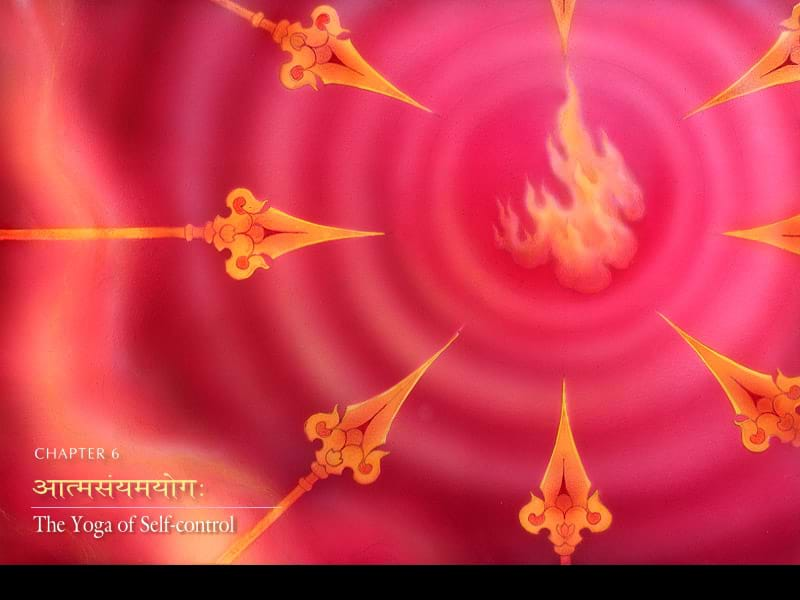
Chapter 6 illustration, titled आत्मसंयमयोगः
Illustration · Sushanto Nath, Sri Aurobindo Society

Chapter outline

Choose a range to read just those verses.

  1. 6·1–4True renunciation.
  2. 6·5–10Spiritual perspective and attitude.
  3. 6·11–26Practical aids to the control of mind in Yoga.
  4. 6·27–32The spiritual vision of oneness
  5. 6·33–45Some psychological difficulties and occult questions.
  6. 6·46–47The great value of Yoga and the supremacy of the Yoga of Love.
  7. 6·1–47Show all 47 verses

The verses

Śrī Bhagavān uvācaश्रीभगवानुवाच

  1. 6·1अनाश्रितः कर्मफलं कार्यं कर्म करोति यः । स संन्न्यासी च योगी च न निरग्निर्न चाक्रियः ॥ १ ॥anāśritaḥ karmaphalaṁ kāryaṁ karma karoti yaḥ, sa saṁnyāsī ca yogī ca na niragnirna cākriyaḥ.Whoever does the work to be done without resort to its fruits, he is the Sannyasin and the Yogin, not the man…
  2. 6·2यं संन्न्यासमिति प्राहुर्योगं तं विद्धि पाण्डव । न ह्यसंन्न्यस्तसङ्कल्पो योगी भवति कश्चन ॥ २ ॥yaṁ saṁnnyāsamiti prāhuryogaṁ taṁ viddhi pāṇḍava, na hyasaṁnnyastasaṅkalpo yogī bhavati kaścana.What they have called renunciation (Sannyasa), know to be in truth Yoga, O Pandava…
  3. 6·3आरुरुक्षोर्मुनेर्योगं कर्म कारणमुच्यते । योगारूढस्य तस्यैव शमः कारणमुच्यते ॥ ३ ॥ārurukṣormuneryogaṁ karma kāraṇamucyate, yogārūḍhasya tasyaiva śamaḥ kāraṇamucyate.For a sage who is ascending the hill of Yoga, action is the cause…
  4. 6·4यदा हि नेन्द्रियार्थेषु न कर्मस्वनुषज्जते । सर्वसङ्कल्पसंन्न्यासी योगारूढस्तदोच्यते ॥ ४ ॥yadā hi nendriyārtheṣu na karmasvanuṣajjate, sarvasaṅkalpasaṁnnyāsī yogārūḍhastadocyate.When one does not get attached to the objects of sense or to works and has renounced all will of desire in the…
  5. 6·5, a key verseउद्धरेदात्मनात्मानं नात्मानमवसादयेत् । आत्मैव ह्यात्मनो बन्धुरात्मैव रिपुरात्मनः ॥ ५ ॥uddharedātmanātmānaṁ nātmānamavasādayet, ātmaiva hyātmano bandhurātmaiva ripurātmanaḥ.By the self thou shouldst deliver the self, thou shouldst not depress and cast down the self (whether by…
  6. 6·6बन्धुरात्मात्मनस्तस्य येनात्मैवात्मना जितः । अनात्मनस्तु शत्रुत्वे वर्तेतात्मैव शत्रुवत् ॥ ६ ॥bandhurātmātmanastasya yenātmaivātmanā jitaḥ, anātmanastu śatrutve vartetātmaiva śatruvat.To the man is his self a friend in whom the (lower) self has been conquered by the (higher) self, but to him…
  7. 6·7जितात्मनः प्रशान्तस्य परमात्मा समाहितः । शीतोष्णसुखदुःखेषु तथा मानापमानयोः ॥ ७ ॥jitātmanaḥ praśāntasya paramātmā samāhitaḥ, śītoṣṇasukhaduḥkheṣu tathā mānāpamānayoḥ.When one has conquered one’s self and attained to the calm of a perfect self-mastery and self-possession, then…
  8. 6·8ज्ञानविज्ञानतृप्तात्मा कूटस्थो विजितेन्द्रियः । युक्त इत्युच्यते योगी समलोष्टाश्मकाञ्चनः ॥ ८ ॥jñānavijñānatṛptātmā kūṭastho vijitendriyaḥ, yukta ityucyate yogī samaloṣṭāśmakāṁcanaḥ.The Yogin, who is satisfied with self-knowledge, tranquil and self-poised, master of his senses, regarding…
  9. 6·9सुहृन्मित्रार्युदासीनमध्यस्थद्वेष्यबन्धुषु । साधुष्वपि च पापेषु समबुद्धिर्विशिष्यते ॥ ९ ॥suhṛnmitrāryudāsīnamadhyasthadveṣyabandhuṣu, sādhuṣvapi ca pāpeṣu samabuddhirviśiṣyate.He who is equal in soul to friend and enemy and to neutral and indifferent, also to sinner and saint, he…
  10. 6·10योगी युञ्जीत सततमात्मानं रहसि स्थितः । एकाकी यतचित्तात्मा निराशीरपरिग्रहः ॥ १० ॥yogī yuñjīta satatamātmānaṁ rahasi sthitaḥ, ekākī yatacittātmā nirāśīraparigrahaḥ.Let the Yogin practise continually union with the Self (so that that may become his normal consciousness)…
  11. 6·11शुचौ देशे प्रतिष्ठाप्य स्थिरमासनमात्मनः । नात्युच्छ्रितं नातिनीचं चैलाजिनकुशोत्तरम् ॥ ११ ॥śucau deśe pratiṣṭhāpya sthiramāsanamātmanaḥ, nātyucchritaṁ nātinīcaṁ cailājinakuśottaram.He should set in a pure spot his firm seat, neither too high, nor yet too low, covered with a cloth, with a…
  12. 6·12तत्रैकाग्रं मनः कृत्वा यतचित्तेन्द्रियक्रियः । उपविश्यासने युञ्ज्याद्योगमात्मविशुद्धये ॥ १२ ॥tatraikāgraṁ manaḥ kṛtvā yatacittendriyakriyaḥ, upaviśyāsane yuñjyādyogamātmaviśuddhaye.Seated there with a concentrated mind and with the workings of the mental consciousness and the senses under…
  13. 6·13समं कायशिरोग्रीवं धारयन्नचलं स्थिरः । संप्रेक्ष्य नासिकाग्रं स्वं दिशश्चानवलोकयन् ॥ १३ ॥samaṁ kāyaśirogrīvaṁ dhārayannacalaṁ sthiraḥ, saṁprekṣya nāsikāgraṁ svaṁ diśaścānavalokayan.Holding the body, head and neck erect, motionless (the posture proper to the practice of Rajayoga), the vision…
  14. 6·14प्रशान्तात्मा विगतभीर्ब्रह्मचारिव्रते स्थितः । मनः संयम्य मच्चित्तो युक्त आसीत मत्परः ॥ १४ ॥praśāntātmā vigatabhīrbrahmacārivrate sthitaḥ, manaḥ saṁyamya maccitto yukta āsīta matparaḥ.The mind kept calm and free from fear and the vow of Brahmacharya observed, the whole controlled mentality…
  15. 6·15युञ्जन्नेवं सदात्मानं योगी नियतमानसः । शान्तिं निर्वाणपरमां मत्संस्थामधिगच्छति ॥ १५ ॥yuñjannevaṁ sadātmānaṁ yogī niyatamānasaḥ, śāntiṁ nirvāṇaparamāṁ matsaṁsthāmadhigacchati.Thus always putting himself in Yoga by control of his mind, the Yogin attains to the supreme peace of Nirvana…
  16. 6·16नात्यश्नतस्तु योगोऽस्ति न चैकान्तमनश्नतः । न चातिस्वप्नशीलस्य जाग्रतो नैव चार्जुन ॥ १६ ॥nātyaśnatastu yogo’sti na caikāntamanaśnataḥ, na cātisvapnaśīlasya jāgrato naiva cārjuna.Verily this Yoga is not for him who eats too much or sleeps too much, even as it is not for him who gives up…
  17. 6·17युक्ताहारविहारस्य युक्तचेष्टस्य कर्मसु । युक्तस्वप्नावबोधस्य योगो भवति दुःखहा ॥ १७ ॥yuktāhāravihārasya yuktaceṣṭasya karmasu, yuktasvapnāvabodhasya yogo bhavati duḥkhahā.Yoga destroys all sorrow for him in whom the sleep and waking, the food, the play, the putting forth of effort…
  18. 6·18यदा विनियतं चित्तमात्मन्येवावतिष्ठते । निःस्पृहः सर्वकामेभ्यो युक्त इत्युच्यते तदा ॥ १८ ॥yadā viniyataṁ cittamātmanyevāvatiṣṭhate, niḥspṛhaḥ sarvakāmebhyo yukta ityucyate tadā.When all the mental consciousness is perfectly controlled and liberated from desire and remains still in the…
  19. 6·19, a key verseयथा दीपो निवातस्थो नेङ्गते सोपमा स्मृता । योगिनो यतचित्तस्य युञ्जतो योगमात्मनः ॥ १९ ॥yathā dīpo nivātastho neṅgate sopamā smṛtā, yogino yatacittasya yuñjato yogamātmanaḥ.Motionless like the light of lamp in a windless place is the controlled consciousness (free from its restless…
  20. 6·20यत्रोपरमते चित्तं निरुद्धं योगसेवया । यत्र चैवात्मनात्मानं पश्यन्नात्मनि तुष्यति ॥ २० ॥yatroparamate cittaṁ niruddhaṁ yogasevayā, yatra caivātmanātmānaṁ paśyannātmani tuṣyati.That in which the mind becomes silent and still by the practice of Yoga…
  21. 6·21सुखमात्यन्तिकं यत्तद् बुद्धिग्राह्यमतीन्द्रियम् । वेत्ति यत्र न चैवायं स्थितश्चलति तत्त्वतः ॥ २१ ॥sukhamātyantikaṁ yattad buddhigrāhyamatīndriyam, vetti yatra na caivāyaṁ sthitaścalati tattvataḥ.That in which the soul knows its own true and exceeding bliss, which is perceived by the intelligence and is…
  22. 6·22यं लब्ध्वा चापरं लाभं मन्यते नाधिकं ततः । यस्मिन्स्थितो न दुःखेन गुरुणापि विचाल्यते ॥ २२ ॥yaṁ labdhvā cāparaṁ lābhaṁ manyate nādhikaṁ tataḥ, yasminsthito na duḥkhena guruṇāpi vicālyate.That is the greatest of all gains and treasure beside which all lose their value, wherein established he is…
  23. 6·23तं विद्याद् दुःखसंयोगवियोगं योगसंज्ञितम् । स निश्चयेन योक्तव्यो योगोऽनिर्विण्णचेतसा ॥ २३ ॥taṁ vidyād duḥkhasaṁyogaviyogaṁ yogasaṁjñitam. sa niścayena yoktavyo yogo’nirviṇṇacetasā,It is the putting away of the contact with pain, the divorce of the mind’s marriage with grief.
  24. 6·24संकल्पप्रभवान्कामांस्त्यक्त्वा सर्वानशेषतः । मनसैवेन्द्रियग्रामं विनियम्य समन्ततः ॥ २४ ॥saṅkalpaprabhavānkāmāṁstyaktvā sarvānaśeṣataḥ, manasaivendriyagrāmaṁ viniyamya samantataḥ.Abandoning without any exception or residue all the desires born of the desire-will and holding the senses by…
  25. 6·25शनैः शनैरुपरमेद् बुद्ध्या धृतिगृहीतया । आत्मसंस्थं मनः कृत्वा न किंचिदपि चिन्तयेत् ॥ २५ ॥śanaiḥ śanairuparamed buddhyā dhṛtigṛhītayā, ātmasaṁsthaṁ manaḥ kṛtvā na kiṁcidapi cintayet.One should slowly cease from mental action by a buddhi held in the grasp of fixity, and having fixed the mind…
  26. 6·26यतो यतो निश्चरति मनश्चंचलमस्थिरम् । ततस्ततो नियम्यैतदात्मन्येव वशं नयेत् ॥ २६ ॥yato yato niścarati manaścaṁcalamasthiram, tatastato niyamyaitadātmanyeva vaśaṁ nayet.Whenever the restless and unquiet mind goes forth, it should be controlled and brought into subjection in the…
  27. 6·27प्रशान्तमनसं ह्येनं योगिनं सुखमुत्तमम् । उपैति शान्तरजसं ब्रह्मभूतमकल्मषम् ॥ २७ ॥praśāntamanasaṁ hyenaṁ yoginaṁ sukhamuttamam, upaiti śāntarajasaṁ brahmabhūtamakalmaṣam.When the mind is thoroughly quieted, then there comes upon the Yogin the highest, stainless, passionless bliss…
  28. 6·28युञ्जन्नेवं सदात्मानं योगी विगतकल्मषः । सुखेन ब्रह्मसंस्पर्शमत्यन्तं सुखमश्नुते ॥ २८ ॥yuñjannevaṁ sadātmānaṁ yogī vigatakalmaṣaḥ, sukhena brahmasaṁsparśamatyantaṁ sukhamaśnute.Thus freed from stain of passion and putting himself constantly into Yoga, the Yogin easily and happily enjoys…
  29. 6·29, a key verseसर्वभूतस्थमात्मानं सर्वभूतानि चात्मनि । ईक्षते योगयुक्तात्मा सर्वत्र समदर्शनः ॥ २९ ॥sarvabhūtasthamātmānaṁ sarvabhūtāni cātmani, īkṣate yogayuktātmā sarvatra samadarśanaḥ.The man whose self is in Yoga, sees the self in all beings and all beings in the self, he is equal-visioned…
  30. 6·30, a key verseयो मां पश्यति सर्वत्र सर्वं च मयि पश्यति । तस्याहं न प्रणश्यामि स च मे न प्रणश्यति ॥ ३० ॥yo māṁ paśyati sarvatra sarvaṁ ca mayi paśyati, tasyāhaṁ na praṇaśyāmi sa ca me na praṇaśyati.He who sees Me everywhere and sees all in Me, to him I do not get lost, nor does he get lost to Me.
  31. 6·31सर्वभूतस्थितं यो मां भजत्येकत्वमास्थितः । सर्वथा वर्तमानोऽपि स योगी मयि वर्तते ॥ ३१ ॥sarvabhūtasthitaṁ yo māṁ bhajatyekatvamāsthitaḥ, sarvathā vartamāno’pi sa yogī mayi vartate.The Yogin who has taken his stand upon oneness and loves Me in all beings, however and in all ways he lives…
  32. 6·32आत्मौपम्येन सर्वत्र समं पश्यति योऽर्जुन । सुखं वा यदि वा दुःखं स योगी परमो मतः ॥ ३२ ॥ātmaupamyena sarvatra samaṁ paśyati yo’rjuna, sukhaṁ vā yadi vā duḥkhaṁ sa yogī paramo mataḥ.He, O Arjuna, who sees with equality everything in the image of the self whether it be grief or it be…

Arjuna uvācaअर्जुन उवाच

  1. 6·33योऽयं योगस्त्वया प्रोक्तः साम्येन मधुसूदन । एतस्याहं न पश्यामि चञ्चलत्वात्स्थितिं स्थिराम् ॥ ३३ ॥yo’yaṁ yogastvayā proktaḥ sāmyena madhusūdana, etasyāhaṁ na paśyāmi caṁcalatvātsthitiṁ sthirām.This Yoga of the nature of equality which has been described by Thee, O Madhusudana, I see no stable…
  2. 6·34चंचलं हि मनः कृष्ण प्रमाथि बलवद् दृढम् । तस्याहं निग्रहं मन्ये वायोरिव सुदुष्करम् ॥ ३४ ॥caṁcalaṁ hi manaḥ kṛṣṇa pramāthi balavad dṛḍham, tasyāhaṁ nigrahaṁ manye vāyoriva suduṣkaram.Restless indeed is the mind, O Krishna; it is vehement, strong and unconquerable…

Śrī Bhagavān uvācaश्रीभगवानुवाच

  1. 6·35असंशयं महाबाहो मनो दुर्निग्रहं चलम् । अभ्यासेन तु कौन्तेय वैराग्येण च गृह्यते ॥ ३५ ॥asaṁśayaṁ mahābāho mano durnigrahaṁ calam, abhyāsena tu kaunteya vairāgyeṇa ca gṛhyate.Without doubt, O mighty-armed, the mind is restless and very difficult to restrain…
  2. 6·36असंयतात्मना योगो दुष्प्राप इति मे मतिः । वश्यात्मना तु यतता शक्योऽवाप्तुमुपायतः ॥ ३६ ॥asaṁyatātmanā yogo duṣprāpa iti me matiḥ, vaśyātmanā tu yatatā śakyo’vāptumupāyataḥ.By one who is not self-controlled, this Yoga is difficult to attain…

Arjuna uvācaअर्जुन उवाच

  1. 6·37अयतिः श्रद्धयोपेतो योगाच्चलितमानसः । अप्राप्य योगसंसिद्धिं कां गतिं कृष्ण गच्छति ॥ ३७ ॥ayatiḥ śraddhayopeto yogāccalitamānasaḥ, aprāpya yogasaṁsiddhiṁ kāṁ gatiṁ kṛṣṇa gacchati.He who takes up Yoga with faith, but cannot control himself with the mind wandering away from Yoga, failing to…
  2. 6·38कच्चिन्नोभयविभ्रष्टश्छिन्नाभ्रमिव नश्यति । अप्रतिष्ठो महाबाहो विमूढो ब्रह्मणः पथि ॥ ३८ ॥kaccinnobhayavibhraṣṭaśchinnābhramiva naśyati, apratiṣṭho mahābāho vimūḍho brahmaṇaḥ pathi.Does he not, O mighty-armed, lose both this life (of human activity and thought and emotion which it has left…
  3. 6·39एतन्मे संशयं कृष्ण छेत्तुमर्हस्यशेषतः । त्वदन्यः संशयस्यास्य छेत्ता न ह्युपपद्यते ॥ ३९ ॥etanme saṁśayaṁ kṛṣṇa chettumarhasyaśeṣataḥ, tvadanyaḥ saṁśayasyāsya chettā na hyupapadyate.This my doubt, O Krishna, please dispel completely without leaving any residue…

Śrī Bhagavān uvācaश्रीभगवानुवाच

  1. 6·40, a key verseपार्थ नैवेह नामुत्र विनाशस्तस्य विद्यते । न हि कल्याणकृत्कश्चिद् दुर्गतिं तात गच्छति ॥ ४० ॥pārtha naiveha nāmutra vināśastasya vidyate, na hi kalyāṇakṛtkaścid durgatiṁ tāta gacchati.O son of Pritha, neither in this life nor hereafter is there destruction for him…
  2. 6·41प्राप्य पुण्यकृतां लोकानुषित्वा शाश्वतीः समाः । शुचीनां श्रीमतां गेहे योगभ्रष्टोऽभिजायते ॥ ४१ ॥prāpya puṇyakṛtāṁ lokānuṣitvā śāśvatīḥ samāḥ, śucīnāṁ śrīmatāṁ gehe yogabhraṣṭo’bhijāyate.Having attained to the worlds of the righteous and having dwelt there for immemorial years, he who fell from…
  3. 6·42अथवा योगिनामेव कुले भवति धीमताम् । एतद्धि दुर्लभतरं लोके जन्म यदीदृशम् ॥ ४२ ॥athavā yogināmeva kule bhavati dhīmatām, etaddhi durlabhataraṁ loke janma yadīdṛśam.Or he may be born in the family of the wise Yogins; indeed such a birth is rare to obtain in this world.
  4. 6·43तत्र तं बुद्धिसंयोगं लभते पौर्वदेहिकम् । यतते च ततो भूयः संसिद्धौ कुरुनन्दन ॥ ४३ ॥tatra taṁ buddhisaṁyogaṁ labhate paurvadehikam, yatate ca tato bhūyaḥ saṁsiddhau kurunandana.There he recovers the mental state of union (with the Divine) which he had formed in his previous life…
  5. 6·44पूर्वाभ्यासेन तेनैव ह्रियते ह्यवशोऽपि सः । जिज्ञासुरपि योगस्य शब्दब्रह्मातिवर्तते ॥ ४४ ॥pūrvābhyāsena tenaiva hriyate hyavaśo’pi saḥ, jijñāsurapi yogasya śabdabrahmātivartate.By that former practice he is irresistibly carried on. Even the seeker after the knowledge of Yoga goes beyond…
  6. 6·45प्रयत्नाद्यतमानस्तु योगी संशुद्धकिल्बिषः । अनेकजन्मसंसिद्धस्ततो याति परां गतिम् ॥ ४५ ॥prayatnādyatamānastu yogī saṁśuddhakilbiṣaḥ, anekajanmasaṁsiddhastato yāti parāṁ gatim.But the Yogin, endeavouring with assiduity, purified from sin, perfecting himself through many lives attains…
  7. 6·46तपस्विभ्योऽधिको योगी ज्ञानिभ्योऽपि मतोऽधिकः । कर्मिभ्यश्चाधिको योगी तस्माद्योगी भवार्जुन ॥ ४६ ॥tapasvibhyo’dhiko yogī jñānibhyo’pi mato’dhikaḥ, karmibhyaścādhiko yogī tasmādyogī bhavārjuna.The Yogin is greater than the doers of askesis, greater than the men of knowledge, greater than the men of…
  8. 6·47, a key verseयोगिनामपि सर्वेषां मद्गतेनान्तरात्मना । श्रद्धावान्भजते यो मां स मे युक्ततमो मतः ॥ ४७ ॥yogināmapi sarveṣāṁ madgatenāntarātmanā, śraddhāvānbhajate yo māṁ sa me yuktatamo mataḥ.Of all Yogins he who with all his inner self given up to me, for me has love and faith, him I hold to be the…

End of the chapter

ॐ तत्सदिति श्रीमद्भगवद्गीतासूपनिषत्सुब्रह्मविद्यायां योगशास्त्रे श्रीकृष्णार्जुनसंवादेआत्मसंयमयोगो नाम षष्ठोऽध्यायः ॥ ६॥

om tatsaditi śrīmadbhagavadgītāsūpaniṣatsubrahmavidyāyāṁ yogaśāstre śrīkṛṣṇārjunasaṁvādeātmasaṁyamayogo nāma ṣaṣṭho’dhyāyaḥ

Thus, in the Upanishad sung by the Lord, the science of Brahman, the scripture of Yoga, the dialogue between Sri Krishna and Arjuna, ends the sixth chapter entitled “The Yoga of Self-control”

Go to a verse

  1. 1
  2. 2
  3. 3
  4. 4
  5. 5
  6. 6
  7. 7
  8. 8
  9. 9
  10. 10
  11. 11
  12. 12
  13. 13
  14. 14
  15. 15
  16. 16
  17. 17
  18. 18
  19. 19
  20. 20
  21. 21
  22. 22
  23. 23
  24. 24
  25. 25
  26. 26
  27. 27
  28. 28
  29. 29
  30. 30
  31. 31
  32. 32
  33. 33
  34. 34
  35. 35
  36. 36
  37. 37
  38. 38
  39. 39
  40. 40
  41. 41
  42. 42
  43. 43
  44. 44
  45. 45
  46. 46
  47. 47