श्रीमद्भगवद्गीताBhagavad Gītā · in the light of Sri Aurobindo, home

Chapter IV42 verses

अथ चतुर्थोऽध्यायः

ज्ञानकर्मसंन्यासयोगः

Knowledge, Works and Renunciation

Jñāna-karma-saṁnyāsa-yoga

He who descends into our birth descends that we may ascend into his; know his birth and his works, and your own become free. — The Delight of Krishna

The soul enters in
yajña — every work laid upon the altar as an offering to the Lord of works
and is led towards
divyaṃ janma karma — the divine birth and the divine works, known in their truth

Recitations

  1. Swami Sarvagananda ji0:00
  2. Ashit Desai0:00
In this chapter

42 verses

Summary of chapter 4

I. The Possibility and Purpose of Avatarhood (1-15)

The Divine Teacher, the Avatar, gives his own example, his own standard to Arjuna. In India the belief in the reality of the Avatar, the descent into form, the revelation of the Godhead in humanity, has grown up and persisted as a logical outcome of the Vedantic view of life and taken firm met in the consciousness of the race.

II. The Divine Worker (16-23)

Equality, impersonality, peace, joy and freedom -these are the signs which distinguish a divine worker; they are all profoundly subjective and do not depend on so outward a thing as doing or not doing works.

III. The Significance of Sacrifice (24-42)

The Gita brings out the inner meaning of the Vedic sacrifice, interpreting the secret symbolism of the ancient Vedic mystics.
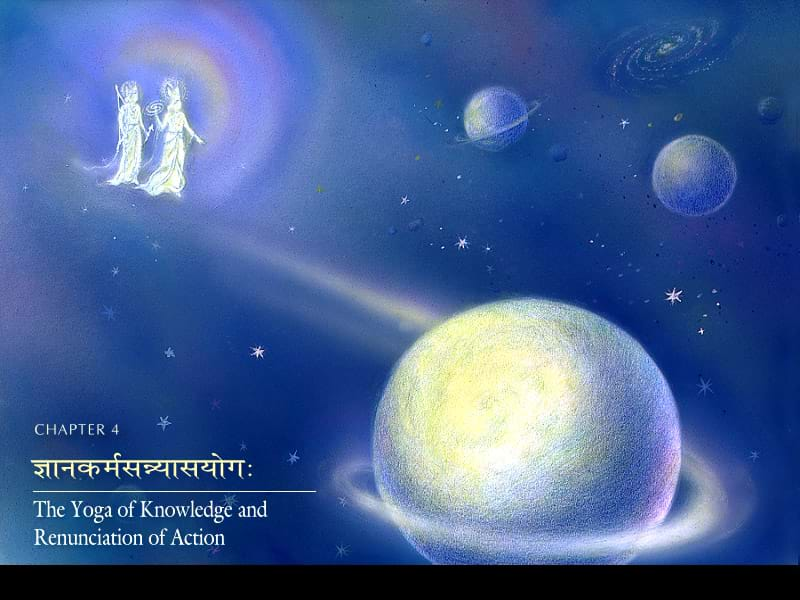
Chapter 4 illustration, titled ज्ञानकर्मसंन्यासयोगः
Illustration · Sushanto Nath, Sri Aurobindo Society

Chapter outline

Choose a range to read just those verses.

  1. 4·1–5The divine origin of the Gita's eternal Yoga.
  2. 4·6–15The truth and purpose of Avatarhood. Shri Krishna's self-revelation, His divine birth and action.
  3. 4·16–23The secret of Karma and Yoga.
  4. 4·24–33Various forms of Sacrifice, the divine principle of it.
  5. 4·34–42Spiritual Knowledge, its great value.
  6. 4·1–42Show all 42 verses

The verses

Showing verses 6–15 of 42 · Show all 42 verses

Śrī Bhagavān uvācaश्रीभगवानुवाच

  1. 4·6अजोऽपि सन्नव्ययात्मा भूतानामीश्वरोऽपि सन् । प्रकृतिं स्वामधिष्ठाय संभवाम्यात्ममायया ॥ ६ ॥ajo’pi sannavyayātmā bhūtānāmīśvaro’pi san, prakṛtiṁ svāmadhiṣṭhāya saṁbhavāmyātmamāyayā.Though I am the unborn, though I am imperishable in my self-existence, though I am the Lord of all existences…
  2. 4·7, a key verseयदा यदा हि धर्मस्य ग्लानिर्भवति भारत । अभ्युत्थानमधर्मस्य तदात्मानं सृजाम्यहम् ॥ ७ ॥yadā yadā hi dharmasya glānirbhavati bhārata, abhyutthānamadharmasya tadātmānaṁ sṛjāmyaham.Whensoever there is the fading of the Dharma and the uprising of unrighteousness, then I loose myself forth…
  3. 4·8, a key verseपरित्राणाय साधूनां विनाशाय च दुष्कृताम् । धर्मसंस्थापनार्थाय संभवामि युगे युगे ॥ ८ ॥paritrāṇāya sādhūnāṁ vināśāya ca duṣkṛtām, dharmasaṁsthāpanārthāya saṁbhavāmi yuge yugeFor the deliverance of the good, for the destruction of the evil-doers, for the enthroning of the Right, I am…
  4. 4·9, a key verseजन्म कर्म च मे दिव्यमेवं यो वेत्ति तत्त्वतः । त्यक्त्वा देहं पुनर्जन्म नैति मामेति सोऽर्जुन ॥ ९ ॥janma karma ca me divyamevaṁ yo vetti tattvataḥ, tyaktvā dehaṁ punarjanma naiti māmeti so’rjuna.He who knoweth thus in its right principles my divine birth and my divine work, when he abandons his body…
  5. 4·10वीतरागभयक्रोधा मन्मया मामुपाश्रिताः । बहवो ज्ञानतपसा पूता मद्भावमागताः ॥ १० ॥vītarāgabhayakrodhā manmayā māmupāśritāḥ, bahavo jñānatapasā pūtā madbhāvamāgatāḥ.Delivered from liking and fear and wrath, full of me, taking refuge in me, many purified by austerity of…
  6. 4·11ये यथा मां प्रपद्यन्ते तांस्तथैव भजाम्यहम् । मम वर्त्मानुवर्तन्ते मनुष्याः पार्थ सर्वशः ॥ ११ ॥ye yathā māṁ prapadyante tāṁstathaiva bhajāmyaham, mama vartmānuvartante manuṣyāḥ pārtha sarvaśaḥ.As men approach Me, so I accept them to My love (bhajāmi); men follow in every way my path, O son of Pritha.
  7. 4·12काङ्क्षन्तः कर्मणां सिद्धिं यजन्त इह देवताः । क्षिप्रं हि मानुषे लोके सिद्धिर्भवति कर्मजा ॥ १२ ॥kāṅkṣantaḥ karmaṇāṁ siddhiṁ yajanta iha devatāḥ, kṣipraṁ hi mānuṣe loke siddhirbhavati karmajā.They who desire the fulfilment of their works on earth sacrifice to the gods (various forms and personalities…
  8. 4·13चातुर्वर्ण्यं मया सृष्टं गुणकर्मविभागशः । तस्य कर्तारमपि मां विद्ध्यकर्तारमव्ययम् ॥ १३ ॥cāturvarṇyaṁ mayā sṛṣṭaṁ guṇakarmavibhāgaśaḥ, tasya kartāramapi māṁ viddhyakartāramavyayam.The fourfold order was created by Me according to the divisions of quality and active function.
  9. 4·14न मां कर्माणि लिम्पन्ति न मे कर्मफले स्पृहा । इति मां योऽभिजानाति कर्मभिर्न स बध्यते ॥ १४ ॥na māṁ karmāṇi limpanti na me karmaphale spṛhā, iti māṁ yo’bhijānāti karmabhirna sa badhyate.Works fix not themselves on Me, nor have I desire for the fruits of action…
  10. 4·15एवं ज्ञात्वा कृतं कर्म पूर्वैरपि मुमुक्षुभिः । कुरु कर्मैव तस्मात्त्वं पूर्वैः पूर्वतरं कृतम् ॥ १५ ॥evaṁ jñātvā kṛtaṁ karma pūrvairapi mumukṣubhiḥ, kuru karmaiva tasmāttvaṁ pūrvaiḥ pūrvataraṁ kṛtam.So knowing was work done by the men of old who sought liberation…

End of the chapter

ॐ तत्सदिति श्रीमद्भगवद्गीतासूपनिषत्सुब्रह्मविद्यायां योगशास्त्रे श्रीकृष्णार्जुनसंवादेज्ञानकर्मसंन्यासयोगो नाम चतुर्थोऽध्यायः ॥ ४॥

om tatsaditi śrīmadbhagavadgītāsūpaniṣatsubrahmavidyāyāṁ yogaśāstre śrīkṛṣṇārjunasaṁvādejñānakarmasaṁnyāsayogo nāma caturtho’dhyāyaḥ

Thus, in the Upanishad sung by the Lord, the science of Brahman, the scripture of Yoga, the dialogue between Sri Krishna and Arjuna, ends the fourth chapter entitled “The Yoga of Knowledge and Renunciation of Action”

Go to a verse

  1. 1
  2. 2
  3. 3
  4. 4
  5. 5
  6. 6
  7. 7
  8. 8
  9. 9
  10. 10
  11. 11
  12. 12
  13. 13
  14. 14
  15. 15
  16. 16
  17. 17
  18. 18
  19. 19
  20. 20
  21. 21
  22. 22
  23. 23
  24. 24
  25. 25
  26. 26
  27. 27
  28. 28
  29. 29
  30. 30
  31. 31
  32. 32
  33. 33
  34. 34
  35. 35
  36. 36
  37. 37
  38. 38
  39. 39
  40. 40
  41. 41
  42. 42