श्रीमद्भगवद्गीताBhagavad Gītā · in the light of Sri Aurobindo, home

Chapter IV42 verses

अथ चतुर्थोऽध्यायः

ज्ञानकर्मसंन्यासयोगः

Knowledge, Works and Renunciation

Jñāna-karma-saṁnyāsa-yoga

He who descends into our birth descends that we may ascend into his; know his birth and his works, and your own become free. — The Delight of Krishna

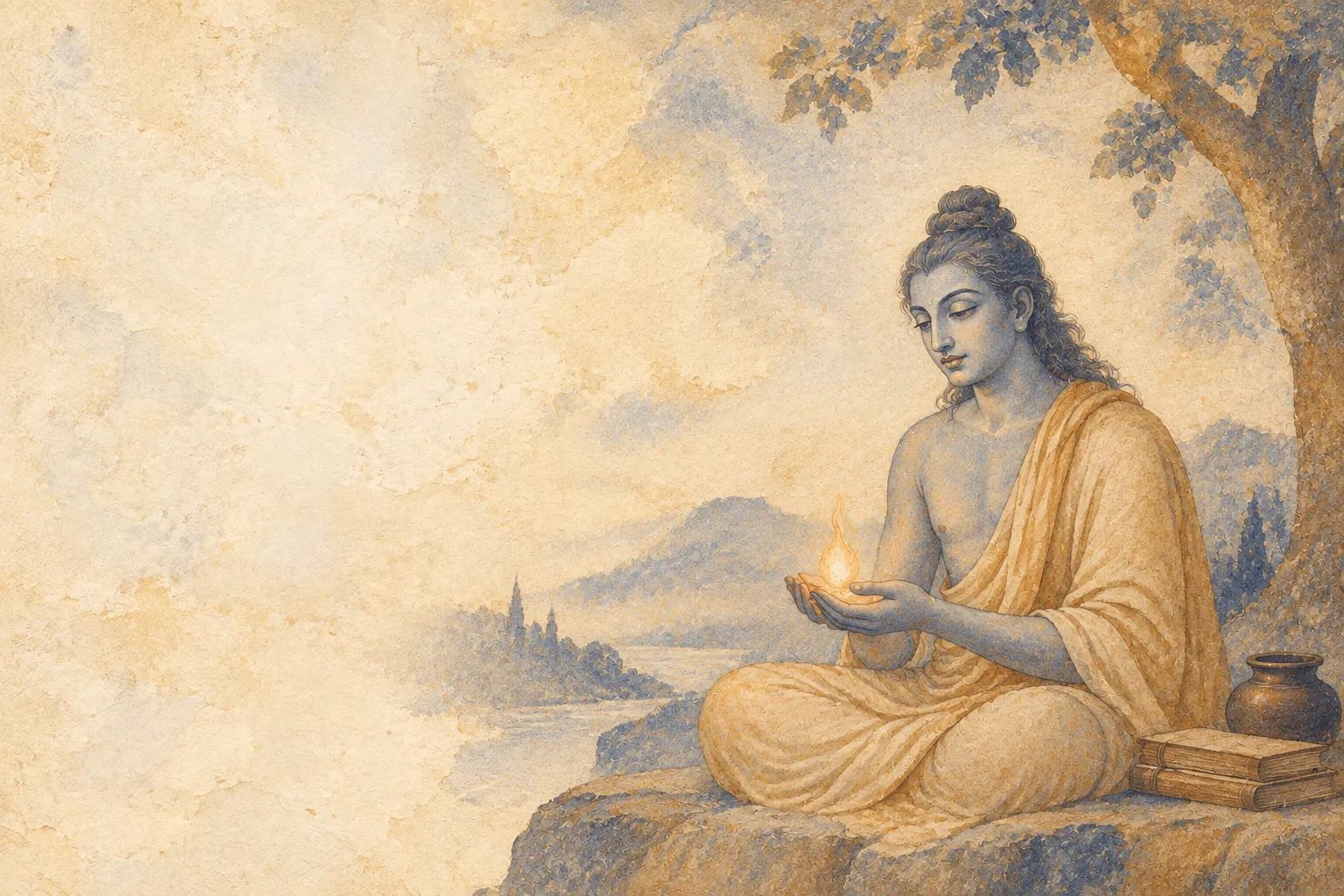
The soul enters in
yajña — every work laid upon the altar as an offering to the Lord of works
and is led towards
divyaṃ janma karma — the divine birth and the divine works, known in their truth

Recitations

  1. Swami Sarvagananda ji0:00
  2. Ashit Desai0:00
In this chapter

42 verses

Summary of chapter 4

I. The Possibility and Purpose of Avatarhood (1-15)

The Divine Teacher, the Avatar, gives his own example, his own standard to Arjuna. In India the belief in the reality of the Avatar, the descent into form, the revelation of the Godhead in humanity, has grown up and persisted as a logical outcome of the Vedantic view of life and taken firm met in the consciousness of the race.

II. The Divine Worker (16-23)

Equality, impersonality, peace, joy and freedom -these are the signs which distinguish a divine worker; they are all profoundly subjective and do not depend on so outward a thing as doing or not doing works.

III. The Significance of Sacrifice (24-42)

The Gita brings out the inner meaning of the Vedic sacrifice, interpreting the secret symbolism of the ancient Vedic mystics.
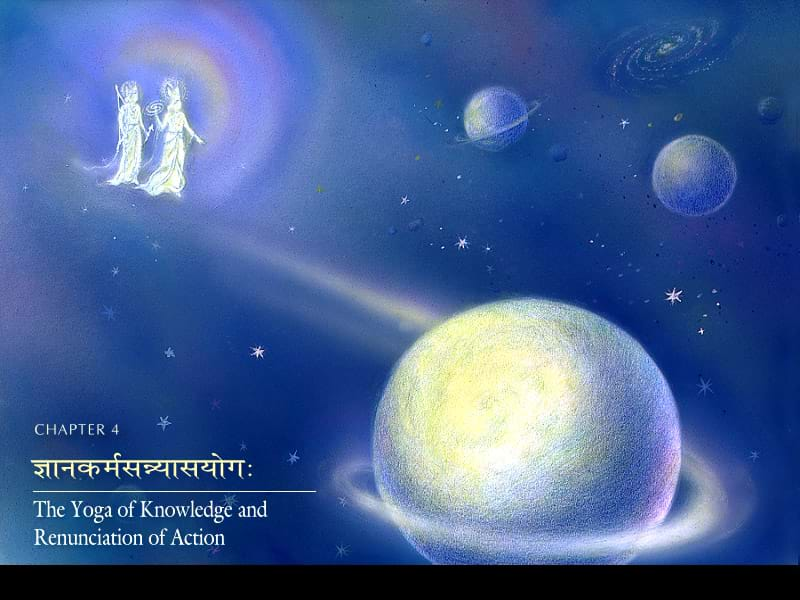
Chapter 4 illustration, titled ज्ञानकर्मसंन्यासयोगः
Illustration · Sushanto Nath, Sri Aurobindo Society

Chapter outline

Choose a range to read just those verses.

  1. 4·1–5The divine origin of the Gita's eternal Yoga.
  2. 4·6–15The truth and purpose of Avatarhood. Shri Krishna's self-revelation, His divine birth and action.
  3. 4·16–23The secret of Karma and Yoga.
  4. 4·24–33Various forms of Sacrifice, the divine principle of it.
  5. 4·34–42Spiritual Knowledge, its great value.
  6. 4·1–42Show all 42 verses

The verses

Showing verses 34–42 of 42 · Show all 42 verses

Śrī Bhagavān uvācaश्रीभगवानुवाच

  1. 4·34तद्विद्धि प्रणिपातेन परिप्रश्नेन सेवया । उपदेक्ष्यन्ति ते ज्ञानं ज्ञानिनस्तत्त्वदर्शिनः ॥ ३४ ॥tadviddhi praṇipātena paripraśnena sevayā, upadekṣyanti te jñānaṁ jñāninastattvadarśinaḥ.Learn that by worshipping the feet of the teacher, by questioning and by service…
  2. 4·35यज्ज्ञात्वा न पुनर्मोहमेवं यास्यसि पाण्डव । येन भूतान्यशेषेण द्रक्ष्यस्यात्मन्यथो मयि ॥ ३५ ॥yajjñātvā na punarmohamevaṁ yāsyasi pāṇḍava, yena bhūtānyaśeṣāṇi drakṣyasyātmanyatho mayi.Possessing that knowledge thou shalt not fall again into the mind’s ignorance, O Pandava…
  3. 4·36अपि चेदसि पापेभ्यः सर्वेभ्यः पापकृत्तमः । सर्वं ज्ञानप्लवेनैव वृजिनं संतरिष्यसि ॥ ३६ ॥api cedasi pāpebhyaḥ sarvebhyaḥ pāpakṛttamaḥ, sarvaṁ jñānaplavenaiva vṛjinaṁ saṁtariṣyasi.Even if thou art the greatest doer of sin beyond all sinners, thou shalt cross over all the crookedness of…
  4. 4·37यथैधांसि समिद्धोऽग्निर्भस्मसात्कुरुतेऽर्जुन । ज्ञानाग्निः सर्वकर्माणि भस्मसात्कुरुते तथा ॥ ३७ ॥yathaidhāṁsi samiddho’gnirbhasmasātkurute’rjuna, jñānāgniḥ sarvakarmāṇi bhasmasātkurute tathā.As a fire kindled turns to ashes its fuel, O Arjuna, so the fire of knowledge turns all works to ashes.
  5. 4·38न हि ज्ञानेन सदृशं पवित्रमिह विद्यते । तत्स्वयं योगसंसिद्धः कालेनात्मनि विन्दति ॥ ३८ ॥na hi jñānena sadṛśaṁ pavitramiha vidyate, tatsvayaṁ yogasaṁsiddhaḥ kālenātmani vindati.There is nothing in the world equal in purity to knowledge, the man who is perfected by Yoga, finds it of…
  6. 4·39श्रद्धावाँल्लभते ज्ञानं तत्परः संयतेन्द्रियः । ज्ञानं लब्ध्वा परां शान्तिमचिरेणाधिगच्छति ॥ ३९ ॥śraddhāvāṁ labhate jñānaṁ tatparaḥ saṁyatendriyaḥ, jñānaṁ labdhvā parāṁ śāntimacireṇādhigacchati.Who has faith, who conquered and controlled the mind and senses, who has fixed his whole conscious being on…
  7. 4·40अज्ञश्चाश्रद्दधानश्च संशयात्मा विनश्यति । नायं लोकोऽस्ति न परो न सुखं संशयात्मनः ॥ ४० ॥ajñaścāśraddadhānaśca saṁśayātmā vinaśyati, nāyaṁ loko’sti na paro na sukhaṁ saṁśayātmanaḥ.The ignorant who has not faith, the soul of doubt goeth to perdition…
  8. 4·41योगसंन्यस्तकर्माणं ज्ञानसंछिन्नसंशयम् । आत्मवन्तं न कर्माणि निबध्नन्ति धनञ्जय ॥ ४१ ॥yogasaṁnyastakarmāṇaṁ jñānasaṁchinnasaṁśayam, ātmavantaṁ na karmāṇi nibadhnanti dhanaṁjaya.He who has destroyed all doubt by knowledge and has by Yoga given up all works and is in possession of the…
  9. 4·42तस्मादज्ञानसंभूतं हृत्स्थं ज्ञानासिनात्मनः । छित्त्वैनं संशयं योगमातिष्ठोत्तिष्ठ भारत ॥ ४२ ॥tasmādajñānasaṁbhūtaṁ hṛtsthaṁ jñānāsinātmanaḥ, chittvainaṁ saṁśayaṁ yogamātiṣṭhottiṣṭha bhārata.Therefore, having cut asunder with the sword of knowledge this doubt that has arisen out of ignorance and…

End of the chapter

ॐ तत्सदिति श्रीमद्भगवद्गीतासूपनिषत्सुब्रह्मविद्यायां योगशास्त्रे श्रीकृष्णार्जुनसंवादेज्ञानकर्मसंन्यासयोगो नाम चतुर्थोऽध्यायः ॥ ४॥

om tatsaditi śrīmadbhagavadgītāsūpaniṣatsubrahmavidyāyāṁ yogaśāstre śrīkṛṣṇārjunasaṁvādejñānakarmasaṁnyāsayogo nāma caturtho’dhyāyaḥ

Thus, in the Upanishad sung by the Lord, the science of Brahman, the scripture of Yoga, the dialogue between Sri Krishna and Arjuna, ends the fourth chapter entitled “The Yoga of Knowledge and Renunciation of Action”

Go to a verse

  1. 1
  2. 2
  3. 3
  4. 4
  5. 5
  6. 6
  7. 7
  8. 8
  9. 9
  10. 10
  11. 11
  12. 12
  13. 13
  14. 14
  15. 15
  16. 16
  17. 17
  18. 18
  19. 19
  20. 20
  21. 21
  22. 22
  23. 23
  24. 24
  25. 25
  26. 26
  27. 27
  28. 28
  29. 29
  30. 30
  31. 31
  32. 32
  33. 33
  34. 34
  35. 35
  36. 36
  37. 37
  38. 38
  39. 39
  40. 40
  41. 41
  42. 42