Chapter II72 verses
अथ द्वितीयोऽध्यायः
सांख्ययोगःThe Yoga of Knowledge
Sāṅkhya-yoga
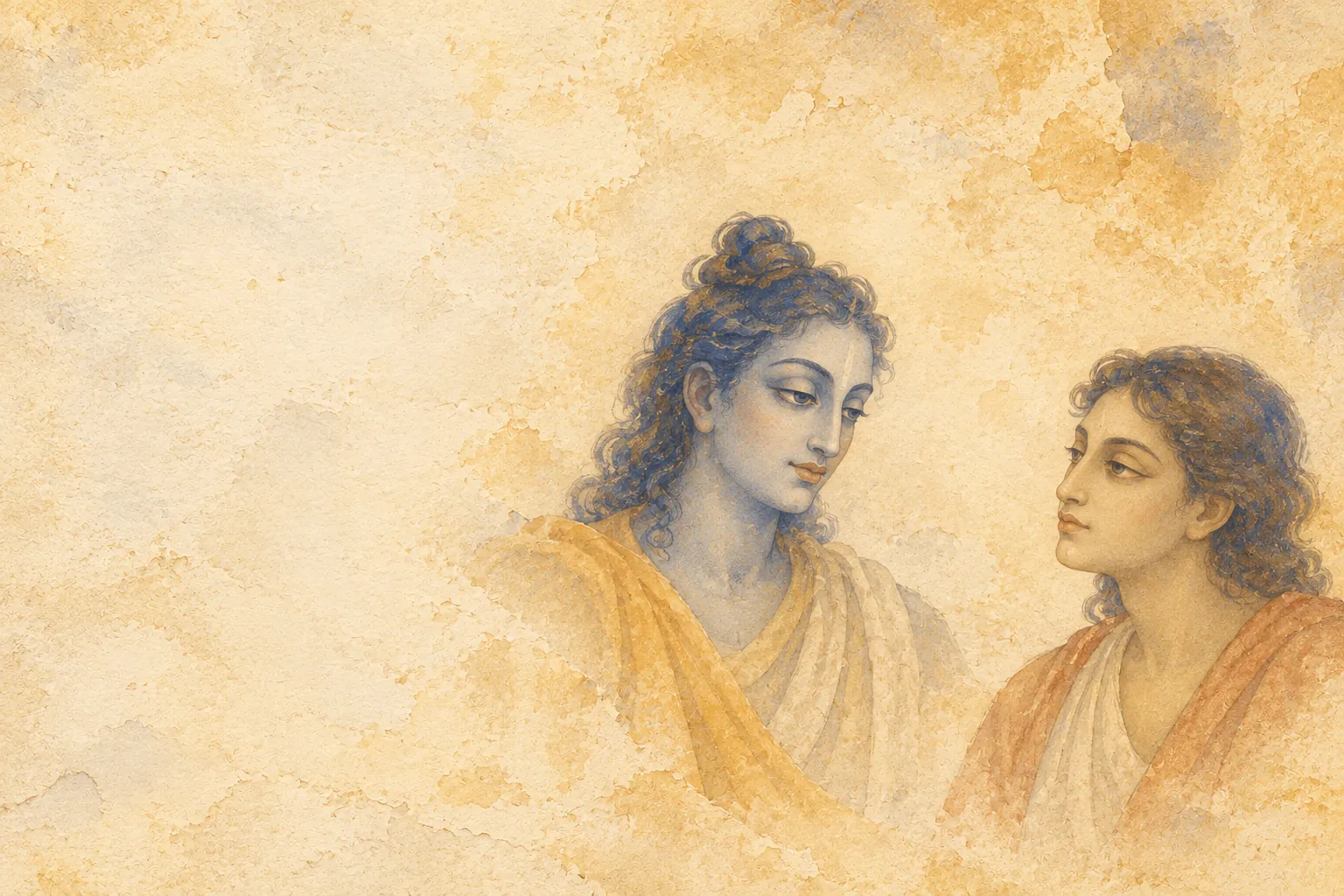
Between the two armies the Charioteer smiles, for he sees in the weeping man that which was never born and cannot be slain. — The Delight of Krishna
Recitations
72 verses
Summary of chapter 2
The answer of the Teacher proceeds upon two different lines:
I. The Creed of the Aryan Fighter (1-38)
First, a brief reply founded upon the philosophic and moral conceptions of Vedanta and the social ldea of duty and honour which formed the ethical basis of Aryan Society.
II. The Yoga of the Intelligent Will (39-72)
Another reply founded on a more intimate Knowledge, opening into deeper truths of our being. which is the real starting-point of the teaching of the Gita. The Gita lays the first foundation by subtly unifying Sankhya, Yoga and Vedanta.
Chapter outline
Choose a range to read just those verses.
- 2·1–3Shri Krishna‘s first response.
- 2·4–6Arjuna's ethical arguments.
- 2·7–9His imploration, his disciple-spirit seeking for the Master's help for the best.
- 2·10–30Shri Krishna's revelation of the essential truth of the spirit, the Sankhva discrimination between the destructible body and the indestructible soul; irrelevance of the fear of death and of grief.
- 2·31–37The ideal of the Kshatriya, the Aryan fighter.
- 2·38–40The call to Yoga of the intelligent will.
- 2·41–46Importance of the right orientation of intelligence and will
- 2·47–53The great significance of the Buddhi Yoga.
- 2·54–72The characteristics of the Self-reposed, the Wisdom-poised.
- 2·1–72Show all 72 verses
The verses
Showing verses 10–30 of 72 · Show all 72 verses
Sañjaya uvācaसञ्जय उवाच
Śrī Bhagavān uvācaश्रीभगवानुवाच
- 2·2कुतस्त्वा कश्मलमिदं विषमे समुपस्थितम् ।
अनार्य
जुष्टमस्वर्ग्यमकीर्तिकरमर्जुन ॥ २ ॥ kutastvā kaśmalamidaṁ viṣame samupasthitam, anāryajuṣṭam Whence has come to thee this dejection, this stain and darkness of the soul in the hour of difficulty and…asvargyam akīrtikaramarjuna. - 2·3क्लैब्यं मा स्म गमः पार्थ नैतत्
त्वय्युपपद्यते । क्षुद्रं हृदयदौर्बल्यं त्यक्त्वोत्तिष्ठ परन्तप ॥ ३ ॥ klaibyaṁ mā sma gamaḥ pārtha naitattvayyupapadyate, kṣudraṁ hṛdayadaurbalyaṁ tyaktvottiṣṭha paraṁtapa.Fall not from the virility of the fighter and the hero, O Partha! it is not fitting in thee.
Arjuna uvācaअर्जुन उवाच
- 2·4कथं भीष्ममहं सङ्ख्ये द्रोणं च मधुसूदन ।
इषुभिः प्रतियोत्स्यामि पूजार्हावरि
सूदन ॥ ४ ॥ kathaṁ bhīṣmamahaṁ sāṅkhye droṇaṁ ca madhusūdana, iṣubhiḥ pratiyotsyāmi pūjārhāvarisūdana.How, O Madhusudana, shall I strike Bhishma and Drona with weapons in battle, they who are worthy of worship, O… - 2·5गुरूनहत्वा हि महानुभावान्
श्रेयो भोक्तुं भैक्ष्यमपीह लोके ।
हत्वार्थकामांस्तु गुरूनिहैव
भुञ्जीय भोगान् रुधिर
प्रदिग्धान् ॥ ५ ॥ gurūnahatvā hi mahānubhāvān śreyo bhoktuṁ bhaikṣyamapīha loke, hatvārthakāmāṁstu gurunihaiva bhuñjīya bhogān rudhirapradigdhān.Better in this world to live even on alms than to slay these high-souled Gurus. - 2·6न चैतद्विद्मः कतरन्नो गरीयो यद्वा जयेम यदि वा नो जयेयुः । यानेव हत्वा न जिजीविषाम- स्तेऽवस्थिताः प्रमुखे धार्तराष्ट्राः ॥ ६ ॥na c’aitad vidmaḥ kataran no garīyo yad vā jayema yadi vā no jayeyuḥ, yān eva hatvā na jijīviṣāmaḥ te’vasthitāḥ pramukhe dhārtarāṣṭrāḥ.Nor do I know which for us is better, that we conquer them or they conquer us, – before us stand the…
- 2·7, a key verseकार्पण्य
दोषोपहत kārpaṇya-doṣopahata-svabhāvaḥ pṛcchāmi tvāṁ-dharma-saṁmūḍha-cetāḥ, yac chreyaḥ syān niścitaṁ brūhi tan me śiṣyas te’haṁ śādhi māṁ tvāṁ prapannam.It is poorness of spirit that has smitten away from me my (true heroic) nature, my whole consciousness is…स्वभावः पृच्छामि त्वां धर्मसम्मूढचेताः । यच्छ्रेयः स्यान्निश्चितं ब्रूहि तन्मे शिष्यस्तेऽहं शाधि मां त्वां प्रपन्नम् ॥ ७ ॥ - 2·8न हि प्रपश्यामि ममापनुद्याद्
यच्छोकमुच्छोषणमिन्द्रियाणाम् ।
अवाप्य भूमावसपत्नमृद्धं
राज्यं सुराणामपि चाधिपत्यम् ॥ ८ ॥na hi prapaśyāmi mamāpanudyād
yacchokam
ucchoṣaṇam I see not what shall thrust from me the sorrow that dries up the senses, even if I should attain rich and…indriyāṇām, avāpya bhūmāvasapatnamṛddhaṁ rājyaṁ surāṇāmapi cādhipatyam.
Sañjaya uvācaसञ्जय उवाच
- 2·9एवमुक्त्वा हृषीकेशं गुडाकेशः परन्तपः । न योत्स्य इति गोविन्दमुक्त्वा तूष्णीं बभूव ह ॥ ९ ॥evamuktvā hṛṣīkeśaṁ guḍākeśaḥ paraṁtapaḥ, na yotsya iti govindamuktvā tūṣṇīṁ babhūva ha.Gudakesha, terror of his foes, having thus spoken to Hrishikesha, said to him, “I will not fight” and became…
- 2·10, a key verseतमुवाच हृषीकेशः प्रहसन्निव भारत । सेनयोरुभयोर्मध्ये विषीदन्तमिदं वचः ॥ १० ॥tamuvāca hṛṣīkeśaḥ prahasanniva bhārata, senayorubhayormadhye viṣīdantamidaṁ vacaḥ.To him thus depressed and discouraged, Hrishikesha, smiling as it were, O Bharata, spoke these words between…
Śrī Bhagavān uvācaश्रीभगवानुवाच
- 2·11अशोच्यानन्वशोचस्त्वं प्रज्ञावादांश्च भाषसे । गतासूनगतासूंश्च नानुशोचन्ति पण्डिताः ॥ ११ ॥aśocyānanvaśocastvaṁ prajñāvādāṁśca bhāṣase, gatāsūnagatāsūṁśca nānuśocanti paṇḍitāḥ.Thou grievest for those that should not be grieved for, yet speakest words of wisdom.
- 2·12न त्वेवाहं जातु नासं न त्वं नेमे जनाधिपाः । न चैव न भविष्यामः सर्वे वयमतः परम् ॥ १२ ॥natvevāhaṁ jātu nāsaṁ na tvaṁ neme janādhipāḥ, na caiva na bhaviṣyāmaḥ sarve vayamataḥ param.It is not true that at any time I was not, nor thou, nor these kings of men…
- 2·13देहिनोऽस्मिन्यथा देहे कौमारं यौवनं जरा ।
तथा देहान्तर
प्राप्तिर् dehino’sminyathā dehe kaumāraṁ yauvanaṁ jarā, tathā dehāntaraधीरस् तत्र न मुह्यति ॥ १३ ॥ prāptir As the soul passes physically through childhood and youth and age, so it passes on to the changing of the body.dhīras tatra na muhyati. - 2·14मात्रास्पर्शास्तु कौन्तेय शीतोष्णसुखदुःखदाः ।
आगमापायिनो
ऽनित्यास्तांस्तितिक्षस्व भारत ॥ १४ ॥ mātrāsparśāstu kaunteya śīt’oṣṇa The material touches, O son of Kunti, giving cold and heat, pleasure and pain, things transient which come and…sukha duḥkha dāḥ, āgam ’āpāyino ’nityāstāṁstitikṣasva bhārata. - 2·15यं हि न व्यथयन्त्येते पुरुषं पुरुषर्षभ । समदुःखसुखं धीरं सोऽमृतत्वाय कल्पते ॥ १५ ॥yaṁ hi na vyathayantyete puruṣaṁ puruṣ’arṣabha, samaduḥkhasukhaṁ dhīraṁ so’mṛtatvāya kalpate.The man whom these do not trouble nor pain, O lionhearted among men, the firm and wise who is equal in…
- 2·16नासतो विद्यते भावो नाभावो विद्यते सतः ।
उभयोरपि दृष्टो
ऽन्तस् nāsato vidyate bhāvo nābhāvo vidyate sataḥ, ubhayorapi dṛṣṭoत्वनयोस् तत्त्व दर्शिभिः ॥ १६ ॥ ’ntas That which really is, cannot go out of existence, just as that which is non-existent cannot come into being.tvanayos tattva darśibhiḥ. - 2·17अविनाशि तु तद्विद्धि येन सर्वमिदं ततम् ।
विनाशमव्ययस्यास्य न कश्चित्
कर्तुमर्हति ॥ १७ ॥ avināśi tu tadviddhi yena sarvamidaṁ tatam, vināśamavyayasyāsya na kaścitkartumarhati.Know that to be imperishable by which all this is extended. Who can slay the immortal spirit? - 2·18अन्तवन्त इमे देहा नित्यस्योक्ताः शरीरिणः । अनाशिनोऽप्रमेयस्य तस्माद्युध्यस्व भारत ॥ १८ ॥antavanta ime dehā nityasyoktāḥ śarīriṇaḥ, anāśino’prameyasya tasmādyudhyasva bhārata.Finite bodies have an end, but that which possesses and uses the body, is infinite, illimitable, eternal…
- 2·19य एनं वेत्ति हन्तारं यश्चैनं मन्यते हतम् उभौ तौ न विजानीतो नायं हन्ति न हन्यते ॥ १९ ॥ya enaṁ vetti hantāraṁ yaścainaṁ manyate hatam ubhau tau na vijānīto nāyaṁ hanti na hanyate.He who regards this (the soul) as a slayer, and he who thinks it is slain, both of them fail to perceive the…
- 2·20, a key verseन जायते म्रियते वा कदाचिन् नायं भूत्वा भविता वा न भूयः । अजो नित्यः शाश्वतोऽयं पुराणो न हन्यते हन्यमाने शरीरे ॥ २० ॥na jāyate mriyate vā kadācin nāyaṁ bhūtvā bhavitā vā na bhūyaḥ, ajo nityaḥ śāśvato’yaṁ purāṇo na hanyate hanyamāne śarīre.This is not born, nor does it die, nor is it a thing that comes into being once and passing away will never…
- 2·21वेदाविनाशिनं नित्यं य एनमजमव्ययम् । कथं स पुरुषः पार्थ कं घातयति हन्ति कम् ॥ २१ ॥vedāvināśinaṁ nityaṁ ya enamajamavyayam, kathaṁ sa puruṣaḥ pārtha kaṁ ghātayati hanti kam.He who knows it as immortal eternal imperishable spiritual existence, how can that man slay, O Partha, or…
- 2·22वासांसि जीर्णानि यथा विहाय नवानि गृह्णाति नरोऽपराणि । तथा शरीराणि विहाय जीर्णानि अन्यानि संयाति नवानि देही ॥ २२ ॥vāsāṁsi jīrṇāni yathā vihāya navāni gṛhṇāti naro’parāṇi, tathā śarīrāṇi vihāya jīrṇāni anyāni saṁyāti navāni dehī.The embodied soul casts away old and takes up new bodies as a man changes worn-out raiment for new.
- 2·23नैनं छिन्दन्ति शस्त्राणि नैनं दहति पावकः । न चैनं क्लेदयन्त्यापो न शोषयति मारुतः ॥ २३ ॥nainaṁ chindanti śastrāṇi nainaṁ dahati pāvakaḥ, na cainaṁ kledayantyāpo na śoṣayati mārutaḥ.Weapons cannot cleave it, nor the fire burn, nor do the waters drench it, nor the wind dry.
- 2·24अच्छेद्यो
ऽयमदाह्यो acchedyoऽयमक्लेद्यो ऽशोष्य एव च । नित्यः सर्वगतः स्थाणुरचलोऽयं सनातनः ॥ २४ ॥ ’yam It is uncleavable, it is incombustible, it can neither be drenched nor dried.adāhyo ’yam akledyo ’śoṣya eva ca, nityaḥ sarvagataḥ sthāṇuracalo’yaṁ sanātanaḥ. - 2·25अव्यक्तो
ऽयमचिन्त्यो avyaktoऽयमविकार्यो ऽयमुच्यते । तस्मादेवं विदित्वैनं नानुशोचितुमर्हसि ॥ २५ ॥ ’yam It is unmanifest, it is unthinkable, it is immutable, so it is described (by the Shrutis)…acintyo ’yam avikāryo ’yamucyate, tasmādevaṁ viditvainaṁ nānuśocitumarhasi. - 2·26अथ चैनं नित्यजातं नित्यं वा मन्यसे मृतम् । तथापि त्वं महाबाहो नैवं शोचितुमर्हसि ॥ २६ ॥atha cainaṁ nityajātaṁ nityaṁ vā manyase mṛtam, tathāpi tvaṁ mahābāho naivaṁ śocitumarhasi.Even if thou thinkest of it (the self) as being constantly subject to birth and death, still, O mighty-armed…
- 2·27जातस्य हि ध्रुवो मृत्युर्ध्रुवं जन्म मृतस्य च । तस्मादपरिहार्येऽर्थे न त्वं शोचितुमर्हसि ॥ २७ ॥jātasya hi dhruvo mṛtyurdhruvaṁ janma mṛtasya ca, tasmādaparihārye’rthe na tvaṁ śocitumarhasi.For certain is death for the born, and certain is birth for the dead…
- 2·28अव्यक्तादीनि भूतानि व्यक्तमध्यानि भारत । अव्यक्तनिधनान्येव तत्र का परिदेवना ॥ २८ ॥avyaktādīni bhūtāni vyaktamadhyāni bhārata, avyaktanidhanānyeva tatra kā paridevanā.Beings are unmanifest in the beginning, manifest in the middle, O Bharata, unmanifest likewise are they in…
- 2·29आश्चर्यवत्पश्यति कश्चिदेनम् आश्चर्यवद्वदति तथैव चान्यः । आश्चर्यवच्चैनमन्यः शृणोति श्रुत्वाऽप्येनं वेद न चैव कश्चित् ॥ २९ ॥āścaryavatpaśyati kaścidenam āścaryavadvadati tathaiva cānyaḥ, āścaryavaccainamanyaḥ śṛṇoti śrutvā’pyenaṁ veda na caiva kaścit.One sees it as a mystery or one speaks of it or hears of it as a mystery, but none knows it.
- 2·30देही नित्यमवध्योऽयं देहे सर्वस्य भारत । तस्मात्सर्वाणि भूतानि न त्वं शोचितुमर्हसि ॥ ३० ॥dehī nityamavadhyo’yaṁ dehe sarvasya bhārata, tasmātsarvāṇi bhūtāni na tvaṁ śocitumarhasi.This dweller in the body of everyone is eternal and indestructible, O Bharata…
- 2·31स्वधर्ममपि चावेक्ष्य न विकम्पितुमर्हसि ।
धर्म्याद्धि युद्धाच्छ्रेयो
ऽन्यत् svadharmamapi cāvekṣya na vikampitumarhasi, dharmyāddhi yuddhācchreyoक्षत्रियस्य न विद्यते ॥ ३१ ॥ ’nyat Further, looking to thine own law of action thou should not tremble…kṣatriyasya na vidyate. - 2·32यदृच्छया चोपपन्नं स्वर्ग
द्वारमपावृतम् । सुखिनः क्षत्रियाः पार्थ लभन्ते युद्धमीदृशम् ॥ ३२ ॥ yadṛcchayā copapannaṁ svargadvāramapāvṛtam, sukhinaḥ kṣatriyāḥ pārtha labhante yuddhamīdṛśam.When such a battle comes to them of itself like the open gate of heaven, happy are the Kshatriyas then. - 2·33अथ चेत्त्वमिमं धर्म्यं संग्रामं न करिष्यसि । ततः स्वधर्मं कीर्तिं च हित्वा पापमवाप्स्यसि ॥ ३३ ॥atha cettvamimaṁ dharmyaṁ saṁgrāmaṁ na kariṣyasi, tataḥ svadharmaṁ kīrtiṁ ca hitvā pāpamavāpsyasi.But if thou dost not this battle for the Right, then hast thou abandoned thy duty and virtue and thy glory…
- 2·34अकीर्तिं चापि भूतानि कथयिष्यन्ति तेऽव्ययाम् ।
संभावितस्य चाकीर्तिर्
मरणादतिरिच्यते ॥ ३४ ॥ akīrtiṁ cāpi bhūtāni kathayiṣyanti te’vyayām, saṁbhāvitasya cākīrtirmaraṇād Besides, men will recount thy perpetual disgrace, and to one in noble station, dishonour is worse than death.atiricyate. - 2·35भयाद्रणादुपरतं मंस्यन्ते त्वां महारथाः । येषां च त्वं बहुमतो भूत्वा यास्यसि लाघवम् ॥ ३५ ॥bhayādraṇāduparataṁ maṁsyante tvāṁ mahārathāḥ, yeṣāṁ ca tvaṁ bahumato bhūtvā yāsyasi lāghavam.The mighty men will think thee fled from the battle through fear, and thou, that wast highly esteemed by them…
- 2·36अवाच्यवादांश्च बहून्वदिष्यन्ति तवाहिताः । निन्दन्तस्तव सामर्थ्यं ततो दुःखतरं नु किम् ॥ ३६ ॥avācyavādāṁśca bahūnvadiṣyanti tavāhitāḥ, nindantastava sāmarthyaṁ tato duḥkhataraṁ nu kim.Many unseemly words will be spoken by thy enemies, slandering thy strength; what is worse grief than that?
- 2·37हतो वा प्राप्स्यसि स्वर्गं जित्वा वा भोक्ष्यसे महीम् । तस्मादुत्तिष्ठ कौन्तेय युद्धाय कृतनिश्चयः ॥ ३७ ॥hato vā prāpsyasi svargaṁ jitvā vā bhokṣyase mahīm, tasmāduttiṣṭha kaunteya yuddhāya kṛtaniścayaḥ.Slain thou shalt win Heaven, victorious thou shalt enjoy the earth…
- 2·38सुखदुःखे समे कृत्वा लाभालाभौ जयाजयौ । ततो युद्धाय युज्यस्व नैवं पापमवाप्स्यसि ॥ ३८ ॥sukhaduḥkhe same kṛtvā lābhālābhau jayājayau, tato yuddhāya yujyasva naivaṁ pāpamavāpsyasi.Make grief and happiness, loss and gain, victory and defeat equal to thy soul and then turn to battle…
- 2·39एषा तेऽभिहिता सांख्ये बुद्धिर्योगे त्विमां शृणु । बुद्ध्या युक्तो यया पार्थ कर्मबन्धं प्रहास्यसि ॥ ३९ ॥eṣā te’bhihitā sāṅkhye buddhiryoge tvimāṁ śṛṇu, buddhyā yukto yayā pārtha karmabandhaṁ prahāsyasi.Such is the intelligence (the intelligent knowledge of things and will) declared to thee in the Sankhya, hear…
- 2·40नेहाभिक्रमनाशोऽस्ति प्रत्यवायो न विद्यते । स्वल्पमप्यस्य धर्मस्य त्रायते महतो भयात् ॥ ४० ॥nehābhikramanāśo’sti pratyavāyo na vidyate, svalpamapyasya dharmasya trāyate mahato bhayāt.On this path no effort is lost, no obstacle prevails; even a little of this dharma delivers from the great…
- 2·41व्यवसायात्मिका बुद्धिरेकेह कुरुनन्दन ।
बहुशाखा ह्यनन्ताश्च बुद्धयो
ऽव्यवसायिनाम् ॥ ४१ ॥ vyavasāyātmikā buddhirekeha kurunandana, bahuśākhā hyanantāśca buddhayo’vyavasāyinām.The fixed and resolute intelligence is one and homogeneous, O joy of the Kurus… - 2·42यामिमां पुष्पितां वाचं प्रवदन्त्यविपश्चितः । वेदवादरताः पार्थ नान्यदस्तीति वादिनः ॥ ४२ ॥yāmimāṁ puṣpitāṁ vācaṁ pravadantyavipaścitaḥ, vedavādaratāḥ pārtha nānyadastīti vādinaḥ.This flowery word which they declare who have not clear discernment, devoted to the creed of the Veda, whose…
- 2·43कामात्मानः स्वर्गपरा जन्म
कर्म kāmātmānaḥ svargaparā janmakarmaphalapradām, kriyāviśeṣabahulāṁ bhogaiśvaryagatiṁ prati.Those who have souls of desire and seekers of Paradise, they declare this flowery word which gives the fruits…फल प्रदाम् । क्रियाविशेषबहुलां भोगैश्वर्यगतिं प्रति ॥ ४३ ॥ - 2·44भोगैश्वर्यप्रसक्तानां तयापहृतचेतसाम् ।
व्यवसायात्मिका बुद्धिः समाधौ न विधीयते ॥ ४४ ॥bhogaiśvarya
prasaktānāṁ tayāpahṛtacetasām, vyavasāyātmikā buddhiḥ samādhau na vidhīyate. The intelligence of those who are misled by that (flowery word), and cling to enjoyment and lordship, is not… - 2·45त्रैगुण्यविषया वेदा निस्त्रैगुण्यो भवार्जुन । निर्द्वन्द्वो नित्यसत्त्वस्थो निर्योगक्षेम आत्मवान् ॥ ४५ ॥traiguṇyaviṣayā vedā nistraiguṇyo bhavārjuna, nirdvandvo nityasattvastho niryogakṣema ātmavān.The action of the three gunas is the subject-matter of the Vedas…
- 2·46यावानर्थ उदपाने सर्वतः संप्लुतोदके । तावान्सर्वेषु वेदेषु ब्राह्मणस्य विजानतः ॥ ४६ ॥yāvānartha udapāne sarvataḥ saṁplutodake, tāvānsarveṣu vedeṣu brāhmaṇasya vijānataḥ.As much use as there is in well with water in flood on every side, so much is there in all the Vedas for the…
- 2·47, a key verseकर्मण्येवाधिकारस्ते मा फलेषु कदाचन ।
मा कर्मफलहेतुर्भूर्मा ते संगो
ऽस्त्वकर्मणि ॥ ४७ ॥ karmaṇyevādhikāraste mā phaleṣu kadācana, mā karmaphalaheturbhūrmā te saṅgo’stvakarmaṇi.Thou hast a right to action, but only to action, never to its fruits… - 2·48, a key verseयोगस्थः कुरु कर्माणि संगं त्यक्त्वा धनंजय । सिद्ध्यसिद्ध्योः समो भूत्वा समत्वं योग उच्यते ॥ ४८ ॥yogasthaḥ kuru karmāṇi saṅgaṁ tyaktvā dhanaṁjaya, siddhyasiddhyoḥ samo bhūtvā samatvaṁ yoga ucyate.Fixed in Yoga do thy actions, having abandoned attachment, having become equal in failure and success…
- 2·49दूरेण ह्यवरं कर्म बुद्धियोगाद्धनञ्जय । बुद्धौ शरणमन्विच्छ कृपणाः फलहेतवः ॥ ४९ ॥dūreṇa hyavaraṁ karma buddhiyogāddhanañjaya, buddhau śaraṇamanviccha kṛpaṇāḥ phalahetavaḥ.Works are far inferior to Yoga of the intelligence, O Dhananjaya; desire rather refuge in the intelligence…
- 2·50बुद्धियुक्तो जहातीह उभे सुकृतदुष्कृते । तस्माद्योगाय युज्यस्व योगः कर्मसु कौशलम् ॥ ५० ॥buddhiyukto jahātīha ubhe sukṛtaduṣkṛte, tasmādyogāya yujyasva yogaḥ karmasu kauśalam.One whose intelligence has attained to unity, casts away from him even here in this world of dualities both…
- 2·51कर्मजं बुद्धियुक्ता हि फलं त्यक्त्वा मनीषिणः । जन्मबन्धविनिर्मुक्ताः पदं गच्छन्त्यनामयम् ॥ ५१ ॥karmajaṁ buddhiyuktā hi phalaṁ tyaktvā manīṣiṇaḥ, janmabandhavinirmuktāḥ padaṁ gacchantyanāmayam.The sages who have united their reason and will with the Divine renounce the fruit which action yields and…
- 2·52यदा ते मोहकलिलं बुद्धिर्
व्यतितरिष्यति । तदा गन्तासि निर्वेदं श्रोतव्यस्य श्रुतस्य च ॥ ५२ ॥ yadā te mohakalilaṁ buddhirvyatitariṣyati, tadā gantāsi nirvedaṁ śrotavyasya śrutasya ca.When thy intelligence shall cross beyond the whirl of delusion, then shalt thou become indifferent to… - 2·53श्रुतिविप्रतिपन्ना ते यदा स्थास्यति निश्चला । समाधावचला बुद्धिस्तदा योगमवाप्स्यसि ॥ ५३ ॥śrutivipratipannā te yadā sthāsyati niścalā, samādhāvacalā buddhistadā yogamavāpsyasi.When thy intelligence which is bewildered by the Shruti, shall stand unmoving and stable in Samadhi, then…
Arjuna uvācaअर्जुन उवाच
Śrī Bhagavān uvācaश्रीभगवानुवाच
- 2·55प्रजहाति यदा कामान्सर्वान्पार्थ मनोगतान् ।
आत्मन्येवात्मना तुष्टः स्थितप्रज्ञस्
तदोच्यते ॥ ५५ ॥ prajahāti yadā kāmānsarvānpārtha manogatān, ātmanyevātmanā tuṣṭaḥ sthitaprajñastadocyate. When a man expels, O Partha, all desires from the mind, and is satisfied in the self by the self, then is he… - 2·56दुःखेष्वनुद्विग्नमनाः सुखेषु विगतस्पृहः ।
वीतरागभयक्रोधः स्थितधीर्
मुनिरुच्यते ॥ ५६ ॥ duḥkheṣvanudvignamanāḥ sukheṣu vigataspṛhaḥ, vītarāgabhayakrodhaḥ sthitadhīrmunirucyate.He whose mind is undisturbed in the midst of sorrows and amid pleasures is free from desire, from whom liking… - 2·57यः सर्वत्रानभिस्नेहस्
तत् yaḥ sarvatrānabhisnehasतत् प्राप्य शुभाशुभम् । नाभिनन्दति न द्वेष्टि तस्य प्रज्ञा प्रतिष्ठिता ॥ ५७ ॥ tat Who in all things is without affection though visited by this good or that evil and neither hates nor…tat prāpya śubhāśubham, nābhinandati na dveṣṭi tasya prajñā pratiṣṭhitā. - 2·58यदा संहरते चायं कूर्मोऽङ्गानीव सर्वशः । इन्द्रियाणीन्द्रियार्थेभ्यस्तस्य प्रज्ञा प्रतिष्ठिता ॥ ५८ ॥yadā saṁharate cāyaṁ kūrmo’ṅgānīva sarvaśaḥ, indriyāṇīndriyārthebhyastasya prajñā pratiṣṭhitā.Who draws away the senses from the objects of sense, as the tortoise draws in his limbs into the shell, his…
- 2·59विषया विनिवर्तन्ते निराहारस्य देहिनः । रसवर्जं रसोऽप्यस्य परं दृष्ट्वा निवर्तते ॥ ५९ ॥viṣayā vinivartante nirāhārasya dehinaḥ, rasavarjaṁ raso’pyasya paraṁ dṛṣṭvā nivartate.If one abstains from food, the objects of sense cease to affect, but the affection itself of the sense, the…
- 2·60यततो ह्यपि कौन्तेय पुरुषस्य विपश्चितः । इन्द्रियाणि प्रमाथीनि हरन्ति प्रसभं मनः ॥ ६० ॥yatato hyapi kaunteya puruṣasya vipaścitaḥ, indriyāṇi pramāthīni haranti prasabhaṁ manaḥ.Even the mind of the wise man who labours for perfection is carried away by the vehement insistence of the…
- 2·61तानि सर्वाणि संयम्य युक्त आसीत मत्परः । वशे हि यस्येन्द्रियाणि तस्य प्रज्ञा प्रतिष्ठिता ॥ ६१ ॥tāni sarvāṇi saṁyamya yukta āsīta matparaḥ, vaśe hi yasyendriyāṇi tasya prajñā pratiṣṭhitā.Having brought all the senses under control, he must sit firm in Yoga, wholly given up to Me…
- 2·62ध्यायतो विषयान्पुंसः संगस्तेषूपजायते ।
सङ्गात्सञ्जायते कामः कामात्
क्रोधो dhyāyato viṣayānpuṁsaḥ saṅgasteṣūpajāyate, saṅgātsaṁjāyate kāmaḥ kāmātkrodho’bhijāyate.In him whose mind dwells on the objects of sense with absorbing interest, attachment to them is formed…ऽभिजायते ॥ ६२ ॥ - 2·63क्रोधाद्भवति सम्मोहः संमोहात्स्मृतिविभ्रमः ।
स्मृतिभ्रंशाद् बुद्धिनाशो बुद्धि
नाशात् krodhādbhavati saṁmohaḥ saṁmohātsmṛtiप्रणश्यति ॥ ६३ ॥ vibhramaḥ, smṛtibhraṁśād buddhināśo buddhināśātpraṇaśyati. Anger leads to bewilderment, from bewilderment comes loss of memory; and by that the intelligence is destroyed… - 2·64रागद्वेषवियुक्तैस्तु विषयानिन्द्रियैश्चरन् । आत्मवश्यैर्विधेयात्मा प्रसादमधिगच्छति ॥ ६४ ॥rāgadveṣaviyuktaistu viṣayānindriyaiścaran, ātmavaśyairvidheyātmā prasādamadhigacchati.It is by ranging over the objects with the senses, but with senses subject to the self, freed from liking and…
- 2·65प्रसादे सर्वदुःखानां हानिरस्योपजायते । प्रसन्नचेतसो ह्याशु बुद्धिः पर्यवतिष्ठते ॥ ६५ ॥prasāde sarvaduḥkhānāṁ hānirasyopajāyate, prasannacetaso hyāśu buddhiḥ paryavatiṣṭhate.By that, large and sweet clearness of soul and temperament, passion and grief find no place…
- 2·66नास्ति बुद्धिरयुक्तस्य न चायुक्तस्य भावना । न चाभावयतः शान्तिरशान्तस्य कुतः सुखम् ॥ ६६ ॥nāsti buddhirayuktasya na cāyuktasya bhāvanā, na cābhāvayataḥ śāntiraśāntasya kutaḥ sukham.For one who is not in Yoga, there is no intelligence, no concentration of thought…
- 2·67इन्द्रियाणां हि चरतां यन्मनोऽनुविधीयते ।
तदस्य हरति प्रज्ञां वायुर्
नावमिवाम्भसि ॥ ६७ ॥ indriyāṇāṁ hi caratāṁ yanmano’nuvidhīyate, tadasya harati prajñāṁ vāyurnāvamivāmbhasi.Such of the roving senses as the mind follows, that carries away the understanding, just as the winds carry… - 2·68तस्माद्यस्य महाबाहो निगृहीतानि सर्वशः । इन्द्रियाणीन्द्रियार्थेभ्यस्तस्य प्रज्ञा प्रतिष्ठिता ॥ ६८ ॥tasmādyasya mahābāho nigṛhītāni sarvaśaḥ, indriyāṇīndriyārthebhyastasya prajñā pratiṣṭhitā.Therefore, O mighty-armed, one who has utterly restrained the excitement of the senses by their objects, his…
- 2·69या निशा सर्वभूतानां तस्यां जागर्ति संयमी । यस्यां जाग्रति भूतानि सा निशा पश्यतो मुनेः ॥ ६९ ॥yā niśā sarvabhūtānāṁ tasyāṁ jāgarti saṁyamī, yasyāṁ jāgrati bhūtāni sā niśā paśyato muneḥ.That (higher being) which is to all creatures a night, is to the self-mastering sage his waking (his luminous…
- 2·70, a key verseआपूर्यमाणमचल
प्रतिष्ठं समुद्रमापः प्रविशन्ति यद्वत् । तद्वत्कामा यं प्रविशन्ति सर्वे स शान्तिमाप्नोति न कामकामी ॥ ७० ॥ āpūryamāṇamacala He attains peace, into whom all desires enter as waters into the sea (an ocean of wide being and…pratiṣṭhaṁ samudramāpaḥ praviśanti yadvat, tadvatkāmā yaṁ praviśanti sarve sa śāntimāpnoti na kāmakāmī. - 2·71विहाय कामान्यः सर्वान्पुमांश्चरति निःस्पृहः । निर्ममो निरहंकारः स शान्तिमधिगच्छति ॥ ७१ ॥vihāya kāmānyaḥ sarvānpumāṁścarati niḥspṛhaḥ, nirmamo nirahaṅkāraḥ sa śāntimadhigacchati.Who abandons all desires and lives and acts free from longing, who has no “I” or “mine” (who has extinguished…
- 2·72एषा ब्राह्मी स्थितिः पार्थ नैनां प्राप्य विमुह्यति ।
स्थित्वास्यामन्तकालेऽपि ब्रह्म
निर्वाणमृच्छति ॥ ७२ ॥ eṣā brāhmī sthitiḥ pārtha naināṁ prāpya vimuhyati, sthitvāsyāmantakāle’pi brahmanirvāṇamṛcchati.This is brāhmī sthitiḥ (firm standing in the Brahman), O son of Pritha.
End of the chapter
॥
ॐ तत्सदिति श्रीमद्भगवद्गीतासूपनिषत्सुब्रह्मविद्यायां योगशास्त्रे श्रीकृष्णार्जुनसंवादेसाङ्ख्ययोगो नाम द्वितीयोऽध्यायः ॥ २॥
om tatsaditi śrīmadbhagavadgītāsūpaniṣatsubrahmavidyāyāṁ yogaśāstre śrīkṛṣṇārjunasaṁvādesāṅkhyayogo nāma dvitīyo’dhyāyaḥ
Go to a verse
- 1
- 2
- 3
- 4
- 5
- 6
- 7
- 8
- 9
- 10
- 11
- 12
- 13
- 14
- 15
- 16
- 17
- 18
- 19
- 20
- 21
- 22
- 23
- 24
- 25
- 26
- 27
- 28
- 29
- 30
- 31
- 32
- 33
- 34
- 35
- 36
- 37
- 38
- 39
- 40
- 41
- 42
- 43
- 44
- 45
- 46
- 47
- 48
- 49
- 50
- 51
- 52
- 53
- 54
- 55
- 56
- 57
- 58
- 59
- 60
- 61
- 62
- 63
- 64
- 65
- 66
- 67
- 68
- 69
- 70
- 71
- 72
