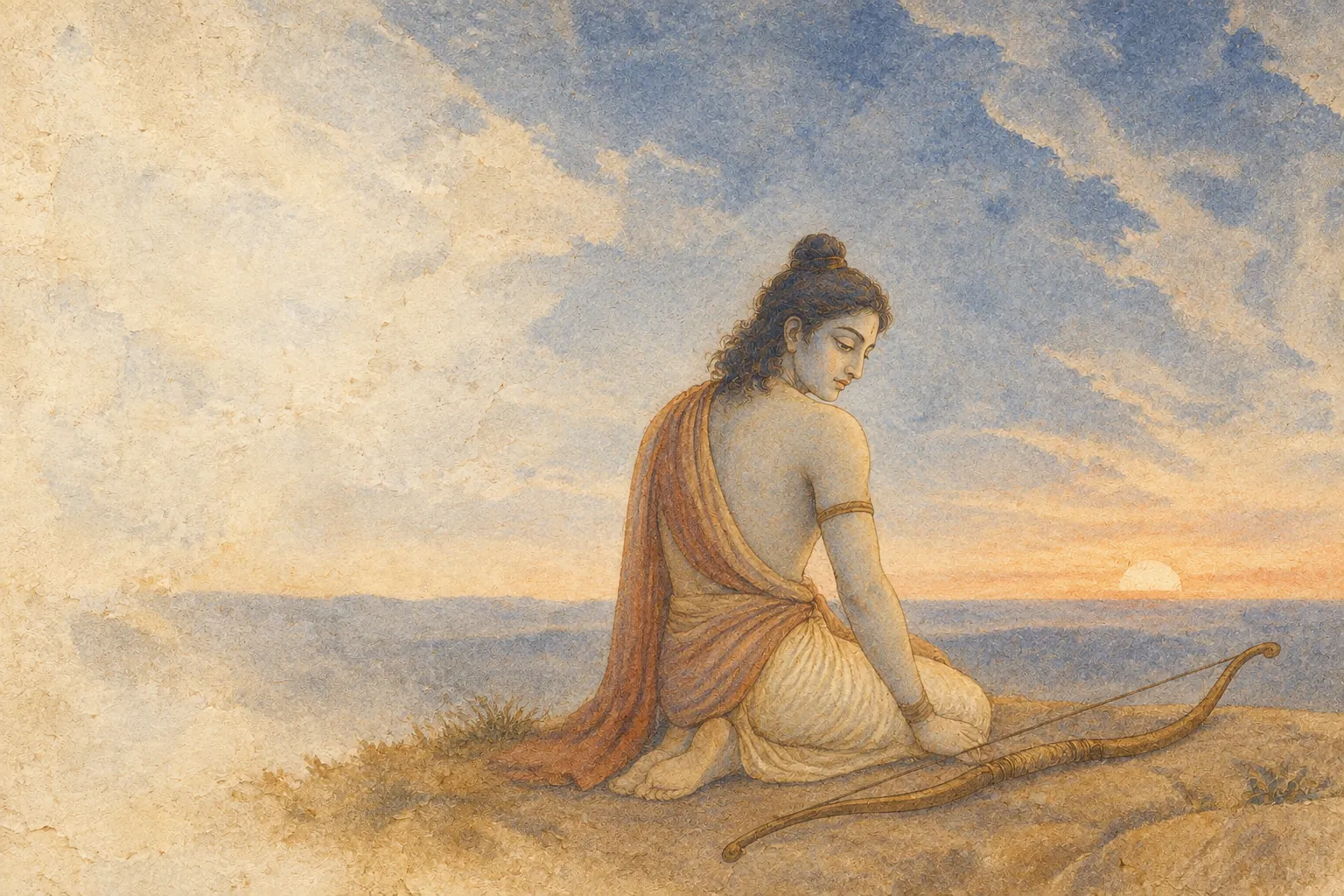
श्रीमद्भगवद्गीताBhagavad Gītā · in the light of Sri Aurobindo, home

Chapter I46 verses

अथ प्रथमोऽध्यायः

अर्जुनविषादयोगः

The Yoga of the Dejection of Arjuna

Arjuna-viṣāda-yoga

Before the Word can be spoken the old law must fail, and in the silence of that failure the Charioteer is already holding the reins. — The Delight of Krishna

The soul enters in
dharma — the settled law of the outer man, confident in its standards
and is led towards
viṣāda — the dejection in which every standard fails and the soul turns to the Friend

Recitations

  1. Swami Sarvagananda ji0:00
  2. Ashit Desai0:00
In this chapter

46 verses

Summary of chapter 1

Kurukshetra - Arjuna, the representative man of his age, is overcome with dejection and sorrow at the most critical moment of his life on the battle-field of Kurukshetra. and raises incidentally the whole question of human life and action; the whole exposition of the Gita revolves and completes its cycle round this original question of Arjuna.
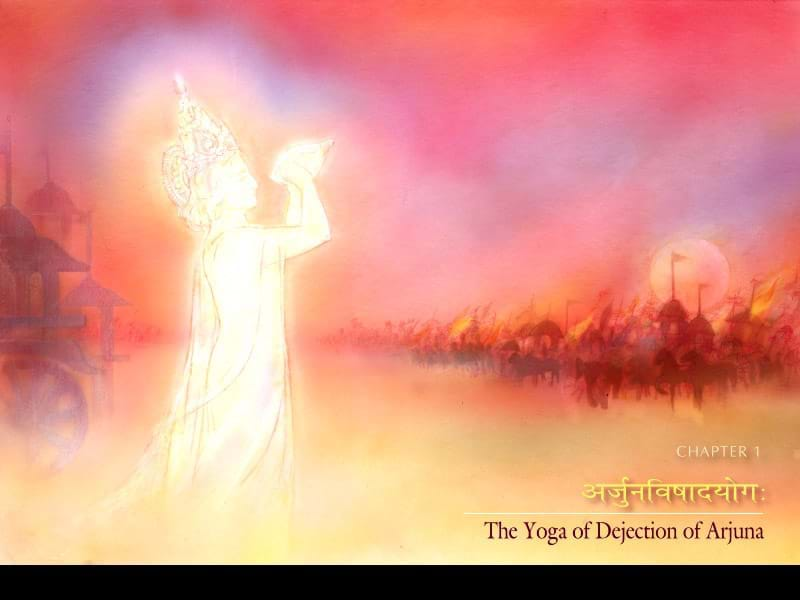
Chapter 1 illustration, titled अर्जुनविषादयोगः
Illustration · Sushanto Nath, Sri Aurobindo Society

Chapter outline

Choose a range to read just those verses.

  1. 1·1–27The Context of Kurukshetra, the battle field.
  2. 1·28–46Arjuna's observations; the revolt of his ethical being, his total dismay; the issue.
  3. 1·1–46Show all 46 verses

The verses

Dhṛtarāṣṭra uvācaधृतराष्ट्र उवाच

  1. 1·1, a key verseधर्मक्षेत्रे कुरुक्षेत्रे समवेता युयुत्सवः । मामकाः पाण्डवाश्चैव किमकुर्वत सञ्जय ॥ १ ॥dharmakṣetre kurukṣetre samavetā yuyutsavaḥ, māmakāḥ pāṇḍavāścaiva kimakurvata sañjaya.On the field of Kurukshetra, the field of the working out of the Dharma, gathered together, eager for battle…

Sañjaya uvācaसञ्जय उवाच

  1. 1·2दृष्ट्वा तु पाण्डवानीकं व्यूढं दुर्योधनस्तदा । आचार्यमुपसंगम्य राजा वचनमब्रवीत् ॥ २ ॥dṛṣṭvā tu pāṇḍavānīkaṁ vyūḍhaṁ duryodhanastadā, ācāryamupasaṁgamya rājā vacanamabravīt.Then the prince Duryodhana, having seen the army of the Pandavas arrayed in battle order, approached his…
  2. 1·3पश्यैतां पाण्डुपुत्राणामाचार्य महतीं चमूम् । व्यूढां द्रुपदपुत्रेण तव शिष्येण धीमता ॥ ३ ॥paśyaitāṁ pāṇḍuputrāṇāmācārya mahatīṁ camūm, vyūḍhāṁ drupadaputreṇa tava śiṣyeṇa dhīmatā.Behold this mighty host of the sons of Pandu, O Acharya, arrayed by Drupada’s son, thy intelligent disciple.
  3. 1·4अत्र शूरा महेष्वासा भीमार्जुनसमा युधि । युयुधानो विराटश्च द्रुपदश्च महारथः ॥ ४ ॥atra śūrā maheṣvāsā bhīmārjunasamā yudhi, yuyudhāno virāṭaśca drupadaśca mahārathaḥ.Here in this mighty army of Pandavas, heroes and great bowmen who are equal in battle to Bhīma and Arjuna are…
  4. 1·5धृष्टकेतुश्चेकितानः काशिराजश्च वीर्यवान् । पुरुजित्कुन्तिभोजश्च शैब्यश्च नरपुंगवः ॥ ५ ॥dhṛṣṭaketuścekitānaḥ kāśirājaśca vīryavān, purujitkuntibhojaśca śaibyaśca narapuṁgavaḥ.Dhrishlaketu, Chekitana, the valiant prince of Kashi, Purujit, Kuntibhoja, and Shaibya, foremost among men are…
  5. 1·6युधामन्युश्च विक्रान्त उत्तमौजाश्च वीर्यवान् । सौभद्रो द्रौपदेयाश्च सर्व एव महारथाः ॥ ६ ॥yudhāmanyuśca vikrānta uttamaujāśca vīryavān saubhadro draupadeyāśca sarva eva mahārathāḥThe strong Yudhamanyu , The victorious Uttamauja, Subhadra's son Abhimanyu and the sons of Draupadi…
  6. 1·7अस्माकं तु विशिष्टा ये तान्निबोध द्विजोत्तम । नायका मम सैन्यस्य संज्ञार्थं तान्ब्रवीमि ते ॥ ७ ॥asmākaṁ tu viśiṣṭā ye tānnibodha dvijottama, nāyakā mama sainyasya saṁjñārthaṁ tānbravīmi teOn our side also know those who are the most distinguished. O best of the twice-born, the leaders of my army…
  7. 1·8भवान्भीष्मश्च कर्णश्च कृपश्च समितिञ्जयः । अश्वत्थामा विकर्णश्च सौमदत्तिस्तथैव च ॥ ८ ॥bhavānbhīṣmaśca karṇaśca kṛpaśca samitiṁjayaḥ, aśvatthāmā vikarṇaśca saumadattistathaiva caThyself, Bhishma, Karṇa, Kripa - the victorious in battle, Ashvatthama, Vikarna, and Saumadatti.
  8. 1·9अन्ये च बहवः शूरा मदर्थे त्यक्तजीविताः । नानाशस्त्रप्रहरणाः सर्वे युद्धविशारदाः ॥ ९ ॥anye ca bahavaḥ śūrā madarthe tyaktajīvitāḥ nānāśastrapraharaṇāḥ sarve yuddhaviśāradāḥAnd many other heroes are ready to renounce their life for my sake.
  9. 1·10अपर्याप्तं तदस्माकं बलं भीष्माभिरक्षितम् । पर्याप्तं त्विदमेतेषां बलं भीमाभिरक्षितम् ॥ १० ॥aparyāptaṁ tadasmākaṁ balaṁ bhīṣmābhirakṣitam paryāptaṁ tvidameteṣāṁ balaṁ bhīmābhirakṣitamOur army marshalled by Bhishma is not enough to win the battle, whereas their army, marshalled by Bhima is…
  10. 1·11अयनेषु च सर्वेषु यथाभागमवस्थिताः । भीष्ममेवाभिरक्षन्तु भवन्तः सर्व एव हि ॥ ११ ॥ayaneṣu ca sarveṣu yathābhāgamavasthitāḥ bhīṣmamevābhirakṣantu bhavantaḥ sarva eva hi.Therefore all ye standing in your respective divisions in the different fronts of the battle, guard Bhishma.
  11. 1·12तस्य संजनयन्हर्षं कुरुवृद्धः पितामहः । सिंहनादं विनद्योच्चैः शंखं दध्मौ प्रतापवान् ॥ १२ ॥tasya saṁjanayanharṣaṁ kuruvṛddhaḥ pitāmahaḥ siṁhanādaṁ vinadyoccaiḥ śaṅkhaṁ dadhmau pratāpavān.Cheering the heart of Duryodhana, the mighty grandsire (Bhishma), the Ancient of the Kurus, resounding the…
  12. 1·13ततः शंखाश्च भेर्यश्च पणवानकगोमुखाः । सहसैवाभ्यहन्यन्त स शब्दस्तुमुलोऽभवत् ॥ १३ ॥tataḥ śaṅkhāśca bheryaśca paṇavānakagomukhāḥ sahasaivābhyahanyanta sa śabdastumulo’bhavat.Then conchs and kettledrums, tabors and drums and horns, suddenly blared forth, and the clamour became…
  13. 1·14ततः श्वेतैर्हयैर्युक्ते महति स्यन्दने स्थितौ । माधवः पाण्डवश्चैव दिव्यौ शङ्खौ प्रदध्मतुः ॥ १४ ॥tataḥ śvetairhayairyukte mahati syandane sthitau mādhavaḥ pāṇḍavaś caiva divyau śaṅkhau pradaghmatuḥ.Then, seated in their great chariot, yoked to white horses, Madhava (Sri Krishna) and the son of Pandu…
  14. 1·15पाञ्चजन्यं हृषीकेशो देवदत्तं धनञ्जयः । पौण्ड्रं दध्मौ महाशङ्खं भीमकर्मा वृकोदरः ॥ १५ ॥pāñcajanyaṁ hṛṣīkeśo devadattaṁ dhanañjayaḥ pauṇḍraṁ dadhmau mahāśaṅkhaṁ bhīmakarmā vṛkodaraḥ.Hrishikesha (Krishna) blew his Panchajanya and Dhananjaya (Arjuna) his Devadatta (god-given)…
  15. 1·16अनन्तविजयं राजा कुन्तीपुत्रो युधिष्ठिरः । नकुलः सहदेवश्च सुघोषमणिपुष्पकौ ॥ १६ ॥anantavijayaṁ rājā kuntīputro yudhiṣṭhiraḥ nakulaḥ sahadevaśca sughoṣamaṇipuṣpakau.The King Yudhishthira, the son of Kunti, blew Anantavijaya, Nakula and Sahadeva blew Sughosha and Manipushpaka.
  16. 1·17काश्यश्च परमेष्वासः शिखण्डी च महारथः । धृष्टद्युम्नो विराटश्च सात्यकिश्चापराजितः ॥ १७ ॥kāśyaśca parameṣvāsaḥ śikhaṇḍī ca mahārathaḥ dhṛṣṭadyumno virāṭaśca sātyakiścāparājitaḥ.And Kashya of the great bow, and Shikhandi of the great prowess, Dhrishtadyumna, Virata and Satyaki blew their…
  17. 1·18द्रुपदो द्रौपदेयाश्च सर्वशः पृथिवीपते । सौभद्रश्च महाबाहुः शंखान्दध्मुः पृथक्पृथक् ॥ १८ ॥drupado draupadeyāśca sarvaśaḥ pṛthivīpate saubhadraśca mahābāhuḥ śaṅkhāndadhmuḥ pṛthakpṛthak.O Lord of earth ! Drupada, the sons of Draupadi and the mighty-armed son of Saubhadra, blew their conchs on…
  18. 1·19स घोषो धार्तराष्ट्राणां हृदयानि व्यदारयत् । नभश्च पृथिवीं चैव तुमुलो व्यनुनादयन् ॥ १९ ॥sa ghoṣo dhārtarāṣṭrāṇāṁ hṛdayāni vyadārayat nabhaśca pṛthivīṁ caiva tumulo vyanunādayan.That tumultuous uproar resounding through earth and sky tore the hearts of the sons of Dhritarashtra.
  19. 1·20अथ व्यवस्थितान्दृष्ट्वा धार्त्रराष्ट्रान् कपिध्वजः । प्रवृत्ते शस्त्रसम्पाते धनुरुद्यम्य पाण्डवः ॥ हृषीकेशं तदा वाक्यमिदमाह महीपते ॥ २० ॥atha vyavasthitāndṛṣṭvā dhārtarāṣṭrān kapidhvajaḥ, pravṛtte śastrasaṁpāte dhanurudyamya pāṇḍavaḥ, hṛṣīkeśaṁ tadā vākyamidamāha mahīpate.Then, beholding the sons of Dhritarashtra standing in battle order, and the flight of missiles having begun…

Arjuna uvācaअर्जुन उवाच

  1. 1·21, a key verseसेनयोरुभयोर्मध्ये रथं स्थापय मेऽच्युत ॥ २१ ॥senayorubhayormadhye rathaṁ sthāpaya me’cyuta.O Achyuta (the faultless, the immovable), stay my chariot between the two armies.
  2. 1·22यावदेतान्निरीक्षेऽहं योद्धुकामानवस्थितान् । कैर्मया सह योद्धव्यमस्मिन् रणसमुद्यमे ॥ २२ ॥yāvadetānnirīkṣe’haṁ yoddhukāmānavasthitān, kairmayā saha yoddhavyamasminraṇasamudyame.I wish to view these myriads standing, longing for battle, whom I have to meet in this holiday of fight.
  3. 1·23योत्स्यमानानवेक्षेऽहं य एतेऽत्र समागताः । धार्तराष्ट्रस्य दुर्बुद्धेर्युद्धे प्रियचिकीर्षवः ॥ २३ ॥yotsyamānānavekṣe’haṁ ya ete’tra samāgatāḥ, dhārtarāṣṭrasya durbuddheryuddhe priyacikīrṣavaḥ.I also want to look upon those who have come here to champion the cause of the evil-minded son of…

Sañjaya uvācaसञ्जय उवाच

  1. 1·24एवमुक्तो हृषीकेशो गुडाकेशेन भारत । सेनयोरुभयोर्मध्ये स्थापयित्वा रथोत्तमम् ॥ २४ ॥evamukto hṛṣīkeśo guḍākeśena bhārata, senayorubhayormadhye sthāpayitvā rathottamam.O Bharata, thus addressed by Gudakesha (one that has overcome sleep, Arjuna), Hrishikesha, stationed the best…
  2. 1·25भीष्मद्रोणप्रमुखतः सर्वेषां च महीक्षिताम् । उवाच पार्थ पश्यैतान्समवेतान्कुरूनिति ॥ २५ ॥bhīṣmadroṇapramukhataḥ sarveṣāṁ ca mahīkṣitām, uvāca pārtha paśyaitānsamavetānkurūniti.After stationing the marvelous chariot, in front of Bhishma, Drona and all the Kings, Krishna said to Arjuna…
  3. 1·26तत्रापश्यत्स्थितान्पार्थः पितॄनथ पितामहान् । आचार्यान्मातुलान्भ्रातॄन्पुत्रान्पौत्रान्सखींस्तथा । श्वशुरान्सुहृदश्चैव सेनयोरुभयोरपि ॥ २६ ॥tatrāpaśyatsthitānpārthaḥ pitṝnatha pitāmahān, ācāryānmātulānbhrātṝnputrānpautrānsakhīṁstathā, śvaśurānsuhṛdaścaiva senayorubhayorapi.Then saw Partha standing upon opposite sides, uncles and grandsires, teachers, mother’s brothers, cousins…
  4. 1·27तान्समीक्ष्य स कौन्तेयः सर्वान्बन्धूनवस्थितान् । कृपया परयाविष्टो विषीदन्निदमब्रवीत् ॥ २७ ॥tānsamīkṣya sa kaunteyaḥ sarvānbandhūnavasthitān, kṛpayā parayāviṣṭo viṣīdannidamabravīt,Seeing all these kinsmen thus standing arrayed, Kaunteya, invaded by great pity, uttered this in sadness and…

Arjuna uvācaअर्जुन उवाच

  1. 1·28, a key verseदृष्ट्वेमं स्वजनं कृष्ण युयुत्सुं समुपस्थितम् । सीदन्ति मम गात्राणि मुखं च परिशुष्यति ॥ २८ ॥dṛṣṭvemaṁ svajanaṁ kṛṣṇa yuyutsuṁ samupasthitam, sīdanti mama gātrāṇi mukhaṁ ca pariśuṣyati.Seeing these my own people, O Krishna, arrayed for battle, my limbs collapse and my mouth is parched.
  2. 1·29वेपथुश्च शरीरे मे रोमहर्षश्च जायते । गाण्डीवं स्रंसते हस्तात्त्वक्चैव परिदह्यते ॥ २९ ॥vepathuśca śarīre me romaharṣaśca jāyate, gāṇḍīvaṁ sraṁsate hastāttvakcaiva paridahyate.Arjuna said:- Seeing these my own people, O Krishna, my body shakes and my hair stands on end…
  3. 1·30न च शक्नोम्यवस्थातुं भ्रमतीव च मे मनः । निमित्तानि च पश्यामि विपरीतानि केशव ॥ ३० ॥na ca śaknomyavasthātuṁ bhramatīva ca me manaḥ, nimittāni ca paśyāmi viparītāni keśava.I am not able to stand and my mind seems to be whirling; also I see evil omens, O Keshava.
  4. 1·31, a key verseन च श्रेयोऽनुपश्यामि हत्वा स्वजनमाहवे । न काङ्क्षे विजयं कृष्ण न च राज्यं सुखानि च ॥ ३१ ॥na ca śreyo’nupaśyāmi hatvā svajanamāhave, na kāṅkṣe vijayaṁ kṛṣṇa na ca rājyaṁ sukhāni ca.Nor do I see any good in slaying my own people in battle…
  5. 1·32किं नो राज्येन गोविन्द किं भोगैर्जीवितेन वा । येषामर्थे काङ्क्षितं नो राज्यं भोगाः सुखानि च ॥ ३२ ॥kiṁ no rājyena govinda kiṁ bhogairjīvitena vā, yeṣāmarthe kāṅkṣitaṁ no rājyaṁ bhogāḥ sukhāni ca.What is kingdom to us, O Govinda, what enjoyment, what even life?
  6. 1·33त इमेऽवस्थिता युद्धे प्राणांस्त्यक्त्वा धनानि च । आचार्याः पितरः पुत्रास्तथैव च पितामहाः ॥ ३३ ॥ta ime’vasthitā yuddhe prāṇāṁstyaktvā dhanāni ca, ācāryāḥ pitaraḥ putrāstathaiva ca pitāmahāḥ.Teachers, fathers, sons, as well as grand-sires stand here in battle, abandoning life and riches.
  7. 1·34मातुलाः श्वशुराः पौत्राः श्यालाः सम्बन्धिनस्तथा । एतान्न हन्तुमिच्छामि घ्नतोऽपि मधुसूदन ॥ ३४ ॥mātulāḥ śvaśurāḥ pautrāḥ śyālāḥ sambandhinastathā, etānna hantumicchāmi ghnato’pi madhusūdana.Mother’s brother, fathers-in-laws, grandsons, brothers-in laws, and other kith and kin - these I would not…
  8. 1·35अपि त्रैलोक्यराज्यस्य हेतोः किं नु महीकृते । निहत्य धार्तराष्ट्रान्नः का प्रीतिः स्याज्जनार्दन ॥ ३५ ॥api trailokyarājyasya hetoḥ kiṁ nu mahīkṛte, nihatya dhārtarāṣṭrānnaḥ kā prītiḥ syājjanārdana.O Janardana, I would not consent to slay even for the kingdom of the three worlds; how then for earth?
  9. 1·36पापमेवाश्रयेदस्मान्हत्वैतानाततायिनः । तस्मान्नार्हा वयं हन्तुं धार्तराष्ट्रान्स्वबान्धवान् । स्वजनं हि कथं हत्वा सुखिनः स्याम माधव ॥ ३६ ॥pāpamevāśrayedasmānhatvaitānātatāyinaḥ, tasmānnārhā vayaṁ hantuṁ dhārtarāṣṭrānsvabāndhavān, svajanaṁ hi kathaṁ hatvā sukhinaḥ syāma mādhava.Sin will take hold of us in slaying them. though they are the aggressors.
  10. 1·37यद्यप्येते न पश्यन्ति लोभोपहतचेतसः । कुलक्षयकृतं दोषं मित्रद्रोहे च पातकम् ॥ ३७ ॥yadyapyete na paśyanti lobhopahatacetasaḥ, kulakṣayakṛtaṁ doṣaṁ mitradrohe ca pātakam.Although these, with a consciousness clouded with greed, see no guilt in the destruction of the family, no…
  11. 1·38कथं न ज्ञेयमस्माभिः पापादस्मान्निवर्तितुम् । कुलक्षयकृतं दोषं प्रपश्यद्भिर्जनार्दन ॥ ३८ ॥kathaṁ na jñeyamasmābhiḥ pāpādasmānnivartitum, kulakṣayakṛtaṁ doṣaṁ prapaśyadbhirjanārdana......... why should not we have the wisdom to draw back from such a sin, O Janardana, we who see the evil in…
  12. 1·39कुल-क्षये प्रणश्यन्ति कुल-धर्माः सनातनाः । धर्मे नष्टे कुलं कृत्स्नम् अधर्मोऽभिभवत्युत ॥ ३९ ॥kula-kṣaye praṇaśyanti kula-dharmāḥ sanātanāḥ, dharme naṣṭe kulaṁ kṛtsnam adharmo’bhibhavatyuta.In the annihilation of the family the eternal traditions of the family are destroyed…
  13. 1·40अधर्माभिभवात्कृष्ण प्रदुष्यन्ति कुलस्त्रियः । स्त्रीषु दुष्टासु वार्ष्णेय जायते वर्णसंकरः ॥ ४० ॥adharmābhibhavātkṛṣṇa praduṣyanti kulastriyaḥ, strīṣu duṣṭāsu vārṣṇeya jāyate varṇasaṅkaraḥ.Owing to predominance of lawlessness, O Krishna, the women of the family become corrupt…
  14. 1·41संकरो नरकायैव कुलघ्नानां कुलस्य च । पतन्ति पितरो ह्येषां लुप्तपिण्डोदकक्रियाः ॥ ४१ ॥saṅkaro narakāyaiva kulaghnānāṁ kulasya ca, patanti pitaro hyeṣāṁ luptapiṇḍodakakriyāḥ.This confusion leads to hell the ruiners of the family, and the family…
  15. 1·42दोषैरेतैः कुलघ्नानां वर्णसंकरकारकैः । उत्साद्यन्ते जातिधर्माः कुलधर्माश्च शाश्वताः ॥ ४२ ॥doṣairetaiḥ kulaghnānāṁ varṇasaṅkarakārakaiḥ, utsādyante jātidharmāḥ kuladharmāśca śāśvatāḥ.By these misdeeds of the ruiners of the family leading to the confusion of the orders, the eternal laws of the…
  16. 1·43उत्सन्नकुलधर्माणां मनुष्याणां जनार्दन । नरके नियतं वासो भवतीत्यनुशुश्रुम ॥ ४३ ॥utsannakuladharmāṇāṁ manuṣyāṇāṁ janārdana, narake niyataṁ vāso bhavatītyanuśuśruma.And men whose family morals are corrupted, O Janardana, live for ever in hell. Thus have we heard.
  17. 1·44अहो बत महत् पापं कर्तुं व्यवसिता वयम् । यद् राज्यसुखलोभेन हन्तुं स्वजनम् उद्यताः ॥ ४४ ॥aho bata mahat pāpaṁ kartuṁ vyavasitā vayam, yad rājyasukhalobhena hantuṁ svajanam udyatāḥ.Alas! We were engaged in committing a great sin, we who were endeavoring to kill our own people through greed…
  18. 1·45यदि मामप्रतीकारमशस्त्रं शस्त्रपाणयः । धार्तराष्ट्रा रणे हन्युस्तन्मे क्षेमतरं भवेत् ॥ ४५ ॥yadi māmapratīkāramaśastraṁ śastrapāṇayaḥ, dhārtarāṣṭrā raṇe hanyustanme kṣemataraṁ bhavet.It is more for my welfare that the sons of Dhritarashtra armed should slay me unarmed and unresisting.

Sañjaya uvācaसञ्जय उवाच

  1. 1·46, a key verseएवमुक्त्वार्जुनः संख्ये रथोपस्थ उपाविशत् । विसृज्य सशरं चापं शोकसंविग्नमानसः ॥ ४६ ॥evamuktvārjunaḥ saṅkhye rathopastha upāviśat, visṛjya saśaraṁ cāpaṁ śoka-saṁvigna-mānasaḥ.Having thus spoken on the battlefield, Arjuna sank down on the seat of the chariot, casting down the divine…

End of the chapter

ॐ तत्सदिति श्रीमद्भगवद्गीतासूपनिषत्सुब्रह्मविद्यायां योगशास्त्रे श्रीकृष्णार्जुनसंवादेअर्जुनविषादयोगो नाम प्रथमोऽध्यायः ॥ १॥

om tatsaditi śrīmadbhagavadgītāsūpaniṣatsubrahmavidyāyāṁ yogaśāstre śrīkṛṣṇārjunasaṁvādearjunaviṣādayogo nāma prathamo’dhyāyaḥ

Thus, in the Upanishad sung by the Lord, the science of Brahman, the scripture of Yoga, the dialogue between Sri Krishna and Arjuna, ends the first chapter entitled “The Yoga of Dejection of Arjuna”

Go to a verse

  1. 1
  2. 2
  3. 3
  4. 4
  5. 5
  6. 6
  7. 7
  8. 8
  9. 9
  10. 10
  11. 11
  12. 12
  13. 13
  14. 14
  15. 15
  16. 16
  17. 17
  18. 18
  19. 19
  20. 20
  21. 21
  22. 22
  23. 23
  24. 24
  25. 25
  26. 26
  27. 27
  28. 28
  29. 29
  30. 30
  31. 31
  32. 32
  33. 33
  34. 34
  35. 35
  36. 36
  37. 37
  38. 38
  39. 39
  40. 40
  41. 41
  42. 42
  43. 43
  44. 44
  45. 45
  46. 46