श्रीमद्भगवद्गीताBhagavad Gītā · in the light of Sri Aurobindo, home

Chapter XIII35 verses

अथ त्रयोदशोऽध्यायः

क्षेत्रक्षेत्रज्ञविभागयोगः

The Yoga of the Distinction between the Field and the Knower of the Field

Kṣetra-kṣetrajña-vibhāga-yoga

Know the body and the mind with all their motions as a field, and know the one Lord who is the Knower in every field, seated equally in all, unperishing within the perishing. — The Delight of Krishna

The soul enters in
madbhaktaḥ sa me priyaḥ — the lover dear to God, who must now know Soul and Nature
and is led towards
kṣetrajña — the Knower in all fields, the one Lord seen seated equally in every being

Recitations

  1. Swami Sarvagananda ji0:00
  2. Ashit Desai0:00
In this chapter

35 verses

Summary of chapter 13

The Field and its Knower - The distinctions between Pumsha and Prakriti. Soul and Nature. rapidly drawn in this chapter in the terms of the Sankhya Philosophy, are the basis on which the Gita rests its whole idea of the liberated being made one in the conscious law of its existence with the Divine.
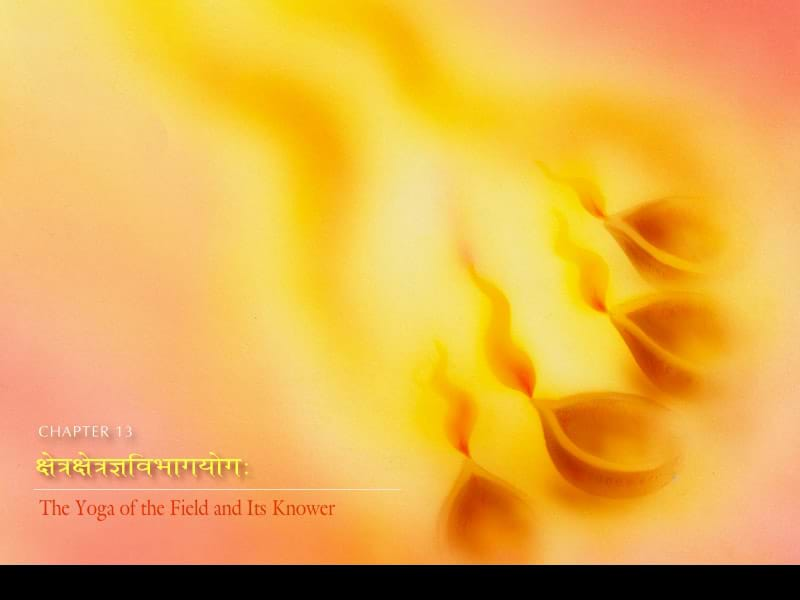
Chapter 13 illustration, titled क्षेत्रक्षेत्रज्ञविभागयोगः
Illustration · Sushanto Nath, Sri Aurobindo Society

Chapter outline

Choose a range to read just those verses.

  1. 13·1–7The Field and the Knower of the Field.
  2. 13·8–12The essentials of Spiritual Knowledge.
  3. 13·13–19The Supreme Knowable.
  4. 13·20–35Purusha and Prakriti, the Vedantic Sankhya and spiritual value of Knowledge.
  5. 13·1–35Show all 35 verses

The verses

Showing verses 8–12 of 35 · Show all 35 verses

Śrī Bhagavān uvācaश्रीभगवानुवाच

  1. 13·8अमानित्वमदम्भित्वमहिंसा क्षान्तिरार्जवम् । आचार्योपासनं शौचं स्थैर्यमात्मविनिग्रहः ॥ ८ ॥amānitvamadambhitvamahiṁsā kṣāntirārjavam, ācāryopāsanaṁ śaucaṁ sthairyamātmavinigrahaḥ.A total absence of wordly pride and arrogance, harmlessness, a candid soul, a tolerant, long-suffering and…
  2. 13·9इन्द्रियार्थेषु वैराग्यमनहङ्कार एव च । जन्ममृत्युजराव्याधिदुःखदोषानुदर्शनम् ॥ ९ ॥indriyārtheṣu vairāgyamanahaṅkāra eva ca, janmamṛtyujarāvyādhiduḥkhadoṣānudarśanam.A firm removal of the natural being’s attraction to the objects of the senses, a radical freedom from egoism…
  3. 13·10असक्तिरनभिष्वंगः पुत्रदारगृहादिषु । नित्यं च समचित्तत्वमिष्टानिष्टोपपत्तिषु ॥ १० ॥asaktiranabhiṣvaṅgaḥ putradāragṛhādiṣu, nityaṁ ca samacittatvamiṣṭāniṣṭopapattiṣu.Absence of clinging to the attachment and absorption of family and home, a constant equalness to all pleasant…
  4. 13·11मयि चानन्ययोगेन भक्तिरव्यभिचारिणी । विविक्तदेशसेवित्वमरतिर्जनसंसदि ॥ ११ ॥mayi cānanyayogena bhaktiravyabhicāriṇī, viviktadeśasevitvamaratirjanasaṁsadi.A meditative mind turned towards solitude and away from the vain noise of crowds and the assemblies of men…
  5. 13·12अध्यात्मज्ञाननित्यत्वं तत्त्वज्ञानार्थदर्शनम् । एतज्ज्ञानमिति प्रोक्तमज्ञानं यदतोऽन्यथा ॥ १२ ॥adhyātmajñānanityatvaṁ tattvajñānārthadarśanam, etajjñānamiti proktamajñānaṁ yadato’nyathā.A philosophic perception of the true sense and large principles of existence, a tranquil continuity of inner…

End of the chapter

ॐ तत्सदिति श्रीमद्भगवद्गीतासूपनिषत्सुब्रह्मविद्यायां योगशास्त्रे श्रीकृष्णार्जुनसंवादेक्षेत्रक्षेत्रज्ञविभागयोगो नाम त्रयोदशोऽध्यायः ॥ १३॥

om tatsaditi śrīmadbhagavadgītāsūpaniṣatsubrahmavidyāyāṁ yogaśāstre śrīkṛṣṇārjunasaṁvādekṣetrakṣetrajñavibhāgayogo nāma trayodaśo’dhyāyaḥ

Thus, in the Upanishad sung by the Lord, the science of Brahman, the scripture of Yoga, the dialogue between Sri Krishna and Arjuna, ends the thirteenth chapter entitled “The Yoga of the Field and the Knower of the Field”

Go to a verse

  1. 1
  2. 2
  3. 3
  4. 4
  5. 5
  6. 6
  7. 7
  8. 8
  9. 9
  10. 10
  11. 11
  12. 12
  13. 13
  14. 14
  15. 15
  16. 16
  17. 17
  18. 18
  19. 19
  20. 20
  21. 21
  22. 22
  23. 23
  24. 24
  25. 25
  26. 26
  27. 27
  28. 28
  29. 29
  30. 30
  31. 31
  32. 32
  33. 33
  34. 34
  35. 35