श्रीमद्भगवद्गीताBhagavad Gītā · in the light of Sri Aurobindo, home

Chapter XVI24 verses

अथ षोडशोऽध्यायः

दैवासुरसंपद्विभागयोगः

The Yoga of Division Between the Divine and the Demonical Endowments

Daivāsura-saṁpad-vibhāga-yoga

Grieve not, for the soul born to the light has only to close the three doors of desire, wrath and greed, and its divine endowment will carry it towards freedom. — The Delight of Krishna

The soul enters in
puruṣottama — the Supreme known and adored, while the nature is not yet made his
and is led towards
daivī sampad — the divine endowment that leads to liberation

Recitations

  1. Swami Sarvagananda ji0:00
  2. Ashit Desai0:00
In this chapter

24 verses

Summary of chapter 16

Deva and Asura - The Site now proceeds to give the psychological discipline by which our human and earthly nature can be transmuted. But first it prefaces the consideration of this enlightening movement by a distinction between two kinds of being. the Deva and the Asura.
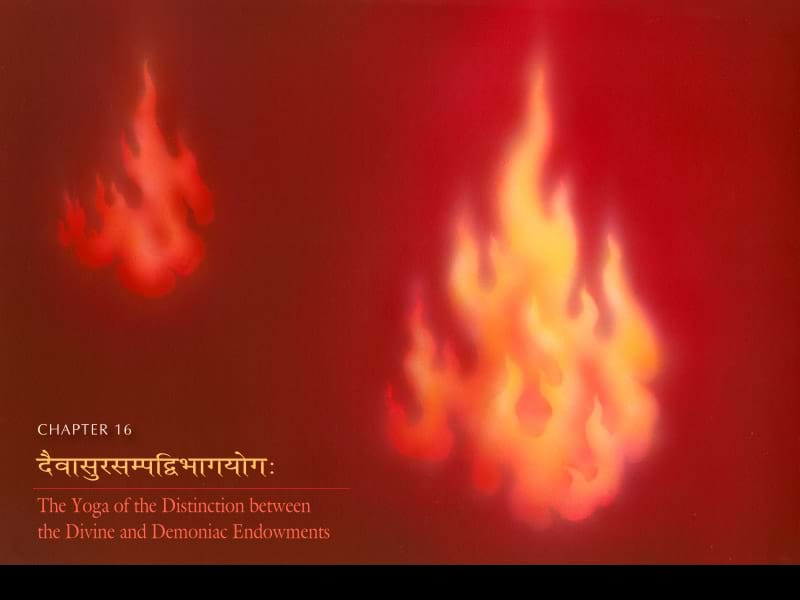
Chapter 16 illustration, titled दैवासुरसंपद्विभागयोगः
Illustration · Sushanto Nath, Sri Aurobindo Society

Chapter outline

Choose a range to read just those verses.

  1. 16·1–3The properties of divine character.
  2. 16·4–18The properties of demoniac character.
  3. 16·19–24The undivine consequences of demoniac properties; advice to regulate life by divine Law.
  4. 16·1–24Show all 24 verses

The verses

Showing verses 4–18 of 24 · Show all 24 verses

Śrī Bhagavān uvācaश्रीभगवानुवाच

  1. 16·4दम्भो दर्पोऽभिमानश्च क्रोधः पारुष्यमेव च । अज्ञानं चाभिजातस्य पार्थ सम्पदमासुरीम्‌ ॥ ४ ॥dambho darpo’bhimānaśca krodhaḥ pāruṣyameva ca, ajñānaṁ cābhijātasya pārtha saṁpadamāsurīm.Pride, arrogance, excessive self-esteem, wrath, harshness, ignorance, these, O Partha, are the wealth of the…
  2. 16·5, a key verseदैवी संपद्विमोक्षाय निबन्धायासुरी मता । मा शुचः संपदं दैवीमभिजातोऽसि पाण्डव ॥ ५ ॥daivī saṁpadvimokṣāya nibandhāyāsurī matā, mā śucaḥ saṁpadaṁ daivīmabhijāto’si pāṇḍava.The Daivic qualities lead towards liberation, the Asuric towards bondage.
  3. 16·6द्वौ भूतसर्गौ लोकेऽस्मिन्दैव आसुर एव च । दैवो विस्तरशः प्रोक्त आसुरं पार्थ मे शृणु ॥ ६ ॥dvau bhūtasargau loke’smindaiva āsura eva ca, daivo vistaraśaḥ prokta āsuraṁ pārtha me śṛṇu.There are two creations of beings in this material world, the Daivic and the Asuric…
  4. 16·7प्रवृत्तिं च निवृत्तिं च जना न विदुरासुराः । न शौचं नापि चाचारो न सत्यं तेषु विद्यते ॥ ७ ॥pravṛttiṁ ca nivṛttiṁ ca janā na vidurāsurāḥ, na śaucaṁ nāpi cācāro na satyaṁ teṣu vidyate.Asuric men have no true knowledge of the way of action or the way of abstention…
  5. 16·8, a key verseअसत्यमप्रतिष्ठं ते जगदाहुरनीश्वरम् । अपरस्परसम्भूतं किमन्यत्कामहैतुकम् ॥ ८ ॥asatyamapratiṣṭhaṁ te jagadāhuranīśvaram, aparasparasambhūtaṁ kimanyatkāmahaitukam.“The world is without God”, they say, “not true, not founded in truth, brought about by a mutual union, with…
  6. 16·9एतां दृष्टिमवष्टभ्य नष्टात्मानोऽल्पबुद्धयः । प्रभवन्त्युग्रकर्माणः क्षयाय जगतोऽहिताः ॥ ९ ॥etāṁ dṛṣṭimavaṣṭabhya naṣṭātmāno’lpabuddhayaḥ, prabhavantyugrakarmāṇaḥ kṣayāya jagato’hitāḥ.Leaning on that way of seeing life, and by its falsehood ruining their souls and their reason, the Asuric men…
  7. 16·10काममाश्रित्य दुष्पूरं दम्भमानमदान्विताः । मोहाद्गृहीत्वासद्ग्राहान्प्रवर्तन्तेऽशुचिव्रताः ॥ १० ॥kāmamāśritya duṣpūraṁ dambhamānamadānvitāḥ, mohādgṛhītvāsadgrāhānpravartante’śucivratāḥ.Resorting to insatiable desire, arrogant, full of self-esteem and the drunkenness of their pride, these…
  8. 16·11चिन्तामपरिमेयां च प्रलयान्तामुपाश्रिताः । कामोपभोगपरमा एतावदिति निश्चिताः ॥ ११ ॥cintāmaparimeyāṁ ca pralayāntāmupāśritāḥ, kāmopabhogaparamā etāvaditi niścitāḥ.They imagine that desire and enjoyment are all the aim of life and (in their inordinate and insatiable pursuit…
  9. 16·12आशापाशशतैर्बद्धाः कामक्रोधपरायणाः । ईहन्ते कामभोगार्थमन्यायेनार्थसञ्चयान् ॥ १२ ॥āśāpāśaśatairbaddhāḥ kāmakrodhaparāyaṇāḥ, īhante kāmabhogārthamanyāyenārthasañcayān.Bound by a hundred bonds, devoured by wrath and lust, unweariedly occupied in amassing unjust gains which may…
  10. 16·13इदमद्य मया लब्धमिमं प्राप्स्ये मनोरथम् । इदमस्तीदमपि मे भविष्यति पुनर्धनम् ॥ १३ ॥idamadya mayā labdhamimaṁ prāpsye manoratham, idamastīdamapi me bhaviṣyati punardhanam.Always they think, “Today I have gained this object of desire, tomorrow I shall have that other…
  11. 16·14असौ मया हतः शत्रुर्हनिष्ये चापरानपि । ईश्वरोऽहमहं भोगी सिद्धोऽहं बलवान्सुखी ॥ १४ ॥asau mayā hataḥ śatrurhaniṣye cāparānapi, īśvaro’hamahaṁ bhogī siddho’haṁ balavānsukhī.Always they think, “I have killed this my enemy, the rest too I will kill.
  12. 16·15आढ्योऽभिजनवानस्मि कोऽन्योस्ति सदृशो मया । यक्ष्ये दास्यामि मोदिष्य इत्यज्ञानविमोहिताः ॥ १५ ॥āḍhyo’bhijanavānasmi ko’nyosti sadṛśo mayā, yakṣye dāsyāmi modiṣya ityajñānavimohitāḥ.Always they think, “I am wealthy, I am of high birth; who is there like unto me?
  13. 16·16अनेकचित्तविभ्रान्ता मोहजालसमावृताः । प्रसक्ताः कामभोगेषु पतन्ति नरकेऽशुचौ ॥ १६ ॥anekacittavibhrāntā mohajālasamāvṛtāḥ, prasaktāḥ kāmabhogeṣu patanti narake’śucau.Thus occupied by many egoistic ideas, deluded, addicted to the gratification of desire (doing works, but doing…
  14. 16·17आत्मसम्भाविताः स्तब्धा धनमानमदान्विताः । यजन्ते नामयज्ञैस्ते दम्भेनाविधिपूर्वकम् ॥ १७ ॥ātmasambhāvitāḥ stabdhā dhanamānamadānvitāḥ, yajante nāmayajñaiste dambhenāvidhipūrvakam.They sacrifice and give not in the true order, but from a self-regarding ostentation, from vanity and with a…
  15. 16·18अहङ्कारं बलं दर्पं कामं क्रोधं च संश्रिताः । मामात्मपरदेहेषु प्रद्विषन्तोऽभ्यसूयकाः ॥ १८ ॥ahaṅkāraṁ balaṁ darpaṁ kāmaṁ krodhaṁ ca saṁśritāḥ, māmātmaparadeheṣu pradviṣanto’bhyasūyakāḥ.In the egoism of their strength and power, in the violence of their wrath and arrogance they hate, despise and…

End of the chapter

ॐ तत्सदिति श्रीमद्भगवद्गीतासूपनिषत्सुब्रह्मविद्यायां योगशास्त्रे श्रीकृष्णार्जुनसंवादेदैवासुरसम्पद्विभागयोगो नाम षोडशोऽध्यायः ॥ १६॥

om tatsaditi śrīmadbhagavadgītāsūpaniṣatsubrahmavidyāyāṁ yogaśāstre śrīkṛṣṇārjunasaṁvādedaivāsurasampadvibhāgayogo nāma ṣoḍaśo’dhyāyaḥ

Thus, in the Upanishad sung by the Lord, the science of Brahman, the scripture of Yoga, the dialogue between Sri Krishna and Arjuna, ends the sixteenth chapter entitled “The Yoga of the Distinction between the Divine and the Demoniac Endowments”

Go to a verse

  1. 1
  2. 2
  3. 3
  4. 4
  5. 5
  6. 6
  7. 7
  8. 8
  9. 9
  10. 10
  11. 11
  12. 12
  13. 13
  14. 14
  15. 15
  16. 16
  17. 17
  18. 18
  19. 19
  20. 20
  21. 21
  22. 22
  23. 23
  24. 24