BlogClassical Sanskrit Poets of India
Bhartrihari
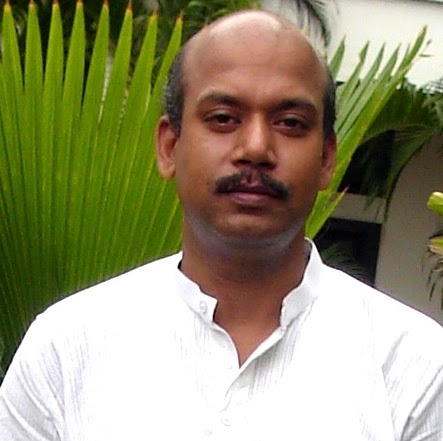
“He has the true heroic turn of mind and turn of speech; he breathes a large and puissant atmosphere. High-spirited, high-minded, high of temper, keen in his sympathies, admiring courage, firmness and daring inspiration above all things, thrilling to impulses of humanity, kindliness and self-sacrifice in spite of his rugged strength, dowered with a trenchant power of scorn and sombre irony, and occasionally of stern invective, but sweetening this masculine severity of character with varied culture and the old high Indian worship of knowledge, goodness and wisdom, such is the man who emerges from the one hundred and odd verses of the Shataka.” Thus writes Sri Aurobindo about Bhartrihari, the author of three Sahatakas or Centuries.
Bhartrihari was a versatile genius. He was a poet, a grammarian and a philosopher of high repute. The three Shatakas – Niti Shataka, Vairagya Shataka and Shringara Shataka bear the testimony to Bhartrihari being a poet of high excellence. His other work Vakyapadiya, proves him to be a grammarian as well as a philosopher.
Due to the absence of authentic chronology it is difficult to say anything concrete of Bhartrihari's life. Today he is a legendary figure. Tradition tells us that Kalidasa and Bhartrihari were contemporaries. Some say that Bhartrihari was the elder brother of Vikramaditya to whom he transferred his crown. Sometimes he is identified as a devotee of Shiva while at other times as a follower of Buddha. Some say that he was a Brahmin, some call him a Kshatriya, and yet some others consider him as a Shudra. Thus, Bhartrihari's personality has become enigmatic, engulfed in the dense fibre of legends, fantasies and conjectures.
Story of Bhartrihari
King Gandharvasena had two sons: Bhartrihari and Vikramaditya. The younger son Vikramaditya was born from the second wife of King Gandharvasena. Bhartrihari and Vikrama were, therefore, sons of the same father but different mothers. The chief of Dhara, the father of Gandharvasena's second wife, took great pains and care in educating his two grandsons, who soon ac¬quired mastery in the Shastras, Ethics, Archery, Music, Dancing and other arts and accomplishments. Though the old chief liked both his grandsons, his love was nevertheless greater for Vikrama. Consequently, after finding him satisfactory in every branch of Literature, Science and Art, and him¬self devoid of any male issue, the chief thought of giving his kingdom to Vikrama, and summoning him to his presence told him his heart's wish. But Vikrama nobly answered him thus: "It is not proper for me to reign before my elder brother. Please, therefore, let Bhartrihari rule over the state and I will conduct the administrations as his prime minister." The old king was quite pleased with the high-mind¬edness of young Vikrama, and subsequently, through Vikrama's earnest entreaties, he made Bhartrihari the king of his territory. Vikrama thereupon changed the capital of Malwa from Dhara to Ujjain, and gave himself up, heart and soul, towards the good government of the country as the prime minister of his elder brother. Bhartrihari, though well-versed in the Shastras, pursued women and a life of debauchery, leaving everything pertaining to the kingdom in the hands of his brother. Vikrama was sorry for the dissolute conduct of Bhartrihari. He spared no pains to estrange the king's heart from hedonism and instead, devote his attention to the affairs of the kingdom God had put into his trust. But, as it happens in such cases, the more he offered his sound and wise counsels, the less impact he made on Bhartrihari, so much so, that disaffection took its root in Vikrama’s mind, and the result was that the once loving brothers soon became inveterate enemies. The fire of hatred was kindled by the fuel of intrigue. In the end, Vikrama was cruelly forced to relinquish his responsibilities and go into exile. After his leaving Ujjain, Vikrama traveled near Dacca in Eastern Bengal, where he decided to live and establish himself. This place is still known as Vikrampur after him.
Having nothing more to do with Vikrama and his movements, we return to Ujjain and find Bhartrihari to be sinking more and more into luxury and licentiousness. As he never cared for the good government of his kingdom, his subjects became tired of his recklessness, and disgusted with his vices they were forced to disregard his authority. Anarchy soon came into being, and there was nothing but disorder and confu¬sion throughout Malwa.
In the meantime, it so happened that Bhartrihari was one day convinced of the infidelity of his queen. Once discovered, the Rani ran from her husband's presence and jumped to her death from the heights of the palace. Bhartrihari then took another wife, Pingala, with whom he soon became attached. One day while hunting deer, he saw one of his hunters who had shot a buck being himself bitten by a venomous snake and was soon laid a corpse on the ground. But the thing which struck him most was that the doe of the hunted buck came to the spot and threw herself dead on her mate’s antlers; and similar to this was the case of the hunter's wife who, on discovering the death of her husband, burnt herself with her lord on her self made pyre. The king ran home in amazement and related the extraordinary events of his day's excursion to Pingala. But Pingala, to his great surprise, coolly remarked that there was nothing strange in the story, for, a true satee could even burn herself without having recourse to fire. Hushing up the matter for some time, the king again went for a hunt to the forest, and to put to test the truth and fidelity of Pingala, he sent one of his attendants to the queen with his clothes soaked in blood to report his death by a tiger. On hearing the sad tidings Pingala, calmly (to all outward appearance) took the king’s stained clothes, put them on the ground, made her last bow to her husband's accoutrements, and rose no more. When the king came to know of the heart-rending catastrophe, he was overwhelmed with grief. Thereafter, he left the palace and began to lead the life of a pious ascetic, so admirably depicted by him in his Vairagya Shataka. He met with the great Yogi Gorakshanatha, who initiated him into the secrets of Mysticism and it is generally believed that Bhartrihari, by his austere practices of yoga, attained to immortality.
The Poetic Genius of Bhartrihari
The classical Sanskrit poetry of Bhartrihari' s age, as observed by SriAurobindo, was characterized by “a sort of lucid density of literary structure; in style a careful blending of curious richness with concentrated force and directness of expression, in thought and matter a crowded vividness and pregnant lucidity.” Looking at Bhartrihari’s Shatakas from this viewpoint Sri Aurobindo further says that these Sahatakas underline “...the three leading motives of the mind of the age, its reflective interest in life and turn for high and strong and minute thinking, its preoccupation with the enjoyment of the senses, and its ascetic spiritual turn...” And also “Bhartrihari's centuries are important to us as the finished expression of a thoroughly typical Aryan personality in the most splendid epoch of Indian culture.” From a literary point of view what we get from Bhartrihari’s poems is this: good poetry, practical wisdom, beautiful imageries, figures of speech, lucidity and simplicity in language, music and rhythm in style.
Here we give few examples from the Shatakas of Bhartrihari:
dikkaalaadyanavacchinnaanantacinmaatramuurtaye
svaanubhuutyekamaanaaya namah shaantaaya tejase.
To the calm Light inviolable all hail
Whom Time divides not, nor Space measures, One,
Boundless and Absolute who is alone,
The eternal vast I am immutable!
(Nitishatakam, Translation by Sri Aurobindo)
shakyo vaarayitum jalena hutabhuk chatrena suuryaatapo
naagendro nishitaankushena samado dandena gogardabhau
vyaadhirbheshajasangrahaishca vividhairmantraprayogairvisham
sarvasyaoshadhamasti shaastravihitam muurkhasya naastyaushadham.
For all ill things there is a cure; the fire’s
Red spleen cool water shall at once appease,
And noontide’s urgent rays the sunshade tires,
And there are spells for poison, and disease
Finds in the leech’s careful drugs its ease.
The raging elephant yet feels the goad,
And the dull ass and obstinate bullock rule
Cudgel and stick and force upon their road.
For one sole plague no cure is found – the fool.
(Nitishatakam, Translation by Sri Aurobindo)
saahityasangiitakalaavihiinah
saakshaat paahuh pucchavishaanahiinah
trinam na khaadannapi jiivamaana-
stadbhaagadheyam paramam pashunaam.
Some minds there are to Art and Beauty dead,
Music and poetry on whose dull ear
Fall barren. Horns grace not their brutish head,
Tails too they lack, yet is their beasthood clear.
That Heaven ordained not upon grass their feasts,
Good fortune is this for the other beasts.
(Nitishatakam, Translation by Sri Aurobindo)
yeshaam na vidyaa na tapo na daanam
jnaanam na shiilam na guna dharmaU
te martyaloke bhuvi bhaarabhuutaa
manushyaruupena mrigaashcharanti.
Whose days to neither charity nor thought
Are given, nor holy deeds nor virtues prized,
Nor learning, such to cumber earth were brought.
How in the human world as men disguised
This herd walk grazing, higher things unsought !
(Nitishatakam, Translation by Sri Aurobindo)
keyuuraani na bhuushayanti purusham haaraa na candrojjvalaa
na snaanam na vilepanam na kusumam naalankritaa muurdhajaa
vaanyekaa samalankaroti purusham yaa samskritaa dhaaryate
kshiiyante khalau bhuuushanaani satatam vaagbhuushanam bhuushanam.
It is not armlets that adorn a man,
Nor necklaces all crammed with moonbright pearls,
Nor baths, nor ointments, nor arranged curls.
‘Tis art of excellent speech that only can
Adorn him: jewels perish, garlands fade;
This only abides and glitters undecayed.
(Nitishatakam, Translation by Sri Aurobindo)
praarabhyate na khalu vighnabhayen niicaih
praarabhya vighnavihataa viramanti madhyaah
vighnaih punahpunarapi pratihanyamaanaah
praarabdhamuttamagunaa na parityajanti.
Some from high action through base fear refrain;
The path is difficult, the way not plain.
Others more noble to begin, are stayed
By a few failures. Great spirits undismayed
Abandon never what once to do they swore.
Baffled beaten back, they spring once more,
Baffeted and borne down, rise up again,
And, full of wounds, come on like iron men.
(Nitishatakam, Translation by Sri Aurobindo)
bhogaah na bhuktaah vayameva bhuktaah
tapo na taptam vayameva taptaah
kaalo na yaato vayameva yaatah
trishnaa na jiirnaa vayameva jiirnaah.
Pleasures have not been enjoyed; it is we who are consumed. Tapas, the fire of askesis, has not been kindled, it is we who are burnt up. Time is not passed; it is we who are spent. Desires have not waned; it is we who have grown old.
(Vairagyashatakam)
yadaasidajnaanam smaratimirasanchaarajanitam
tadaa sarvam naariimayamidamashesham jagadabhuut.
idaaniimasmaakam patutaravivekaaanjanadrishaam
samiibhuutaa drististribhuvanamapi brahma manute.
When in the darkness of love,
Ignorant, I wandered about, I saw nothing,
Nothing in the wide world, but only women;
But just when I was cured of the blindness,
Through knowledge, the ointment for the eye,
Forthwith appeared all calmly over my eye,
And I saw in the world only one: Brahman!
(Shringarashatakam)
1 comment
Sign in with Google to join the conversation.
Sign in to comment
Venkata dilip kumar
Dr, Mishraji, please organise soon an appreciation course on Sri Bhartrhari and it will be such delight and enlightenment to take part in such a course covering all the three Shatakams. I simply can't wait to participate and recite under your careful guidance all those immortal shlokas.
We studied a selection from Neeti Shatakam in our Diploma Course at the Madras Sanskrit College, and even there, so much joy sprung up in my heart and intellect.
The verse you have chosen from Shringarashatakam is so outstanding, I can't wait to study the whole of that Shatakam.
Thanks a lot Dr. Mishraji.